







Abstract
Multi-channel dilution analysis (MCDA) is a novel, matrix-matched calibration method that automatically dilutes a standard solution using a tubing manifold to split a solution stream traveling between an autosampler and an analytical instrument. The manifold consists of separate tubing channels of various lengths, resulting in a stairstep of signal levels as different portions of the solution reach the instrument to be measured at different points in time. Multi-channel dilution analysis was initially developed on an inductively coupled plasma optical emission spectrometer (ICP-OES) equipped with a peristaltic pump with five channels, with three used to drive solution through individual tubes in the manifold and a fourth reserved for waste. The setup limited MCDA measurements from being realized on instruments that have fewer pump channels without employing an external pump. The use of a single peristaltic pump line to drive solution through the entire tubing manifold is proposed as a feasible way to overcome this hardware limitation and is applied to both ICP-OES and ICP mass spectrometry (ICP-MS). The method is validated through the analysis of certified reference materials, with recoveries for a suite of analytes ranging from 83% to 117%, with relative standard deviations on the order of 1%. The matrix matching capabilities of the method are demonstrated through the analysis of spiked matrices containing high concentrations of ethanol and calcium, and a comparison to traditional calibration techniques. In addition, the improvements in calibration statistics for ICP-MS measurements using MCDA are discussed.
This is a visual representation of the abstract.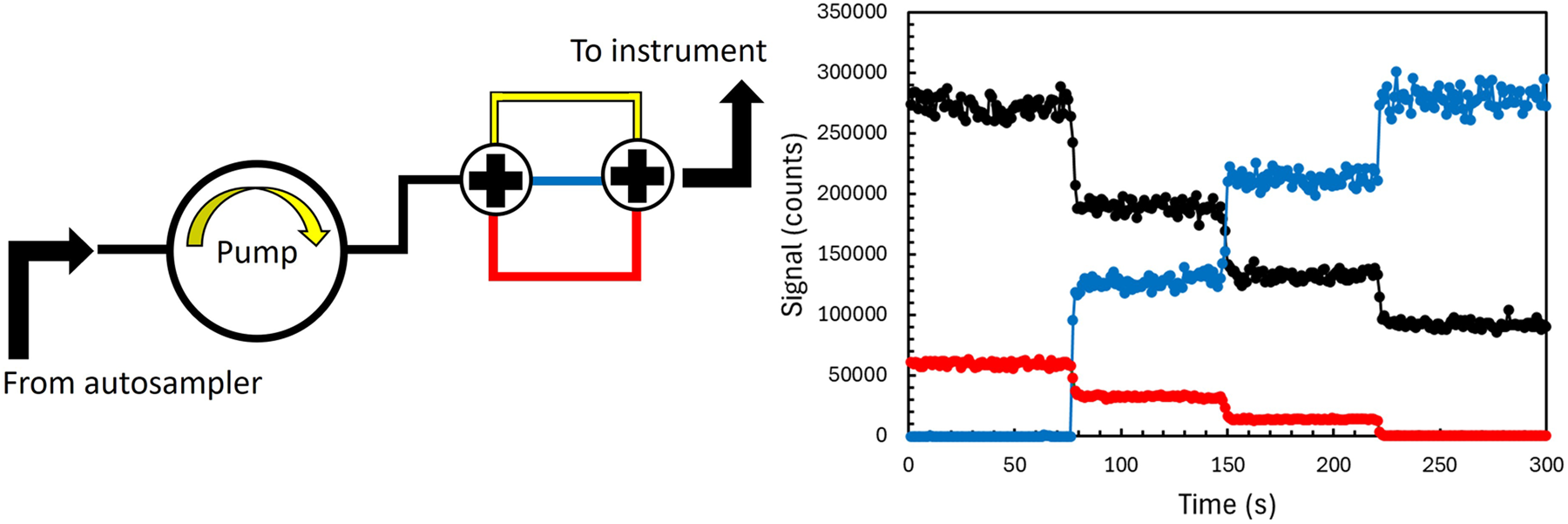
Keywords
Get full access to this article
View all access options for this article.
References
Supplementary Material
Please find the following supplemental material available below.
For Open Access articles published under a Creative Commons License, all supplemental material carries the same license as the article it is associated with.
For non-Open Access articles published, all supplemental material carries a non-exclusive license, and permission requests for re-use of supplemental material or any part of supplemental material shall be sent directly to the copyright owner as specified in the copyright notice associated with the article.
