







Abstract
I was in Cairo in October 2019, when Egyptians – despite extreme immediate danger and state prohibition of demonstrations – took to the streets in protest for the first time since the autocratic regime of President Sisi came to power. The exiled Egyptian businessman Mohamed Ali, who had worked for President Abdel Fattah al-Sisi’s regime as a contractor, sparked scattered protests with videos accusing Sisi of corruption. The street protests started on 20 September 2019 across Egypt, with mass arrests (and the erection of checkpoints downtown, where phones were confiscated and examined for any traces of Ali’s videos) as an instant state response in a new era in which all Egyptians are unsafe, not only political activists. I recognised an intense sonic fear among my interlocutors. When I visited one friend, Alaa, in his downtown home, the lift was broken. An aged man, who I thought was a neighbour, started to talk to me and asked me if he could help. Suddenly Alaa, who overheard us, called down and told me to climb the many stairs instead. He added sharply, ‘do not listen to or talk with anyone’. Alaa later told me that after a close friend of his was detained – together with his laptop which contained a lot of Alaa’s sensitive sonic political information – he had stayed at home for three weeks. He had been terrified (even though the files were well hidden). Alaa listened to every unusual sound outside his door. Were the security forces outside his door? Was this the end? He did not even eat during this period, since he had been too afraid to go out and buy groceries. When his friend was released a couple of weeks later, Alaa found out that they had not found the sensitive material.
The introductory vignette is an illustrative example of how the sonic reveals itself as a key aspect of political activity and state repression in Egypt as well as to a specific kind of home-making in displacement. The intimate link between sonic state repression in relation to Cairene political activist masculinities will be unfolded further in this article. These men, despite their immense fear, resisted the Hosni El Sayed Mubarak regime and continue to oppose the current autocratic state of Sisi.
This article offers a sensorial ethnography and elaborates our understanding of what I term sonic infrastructure
1
(encompassing both audible spaces and matter), as techno-politics and porous urban masculinities; how in/security and dis/emplacement feel, but also how these, in turn, influence peoples’ sense of gendered identity and belonging and dislocation, as well as how they make sense of and navigate political turmoil, conflict and refuge. As Larkin (2013: 330) and others (Lawhon et al., 2018) point out, infrastructure is fluid: Infrastructures are not, in any positivist sense, simply ‘out there.’ The act of defining an infrastructure is a categorizing moment. Taken thoughtfully, it comprises a cultural analytic that highlights the epistemological and political commitments involved in selecting what one sees as infrastructural (and thus causal) and what one leaves out.
My contention is that the sonic dimension of this construct is substantial, not least because sound infiltrates our bodies and the environments in which we live, and has its own politics too. By acknowledging sound, whose vibrations are material and can be measured as infrastructures, we are able to explore vibrations as sonic infrastructures; as tools of techno-politics (see Figure 1).
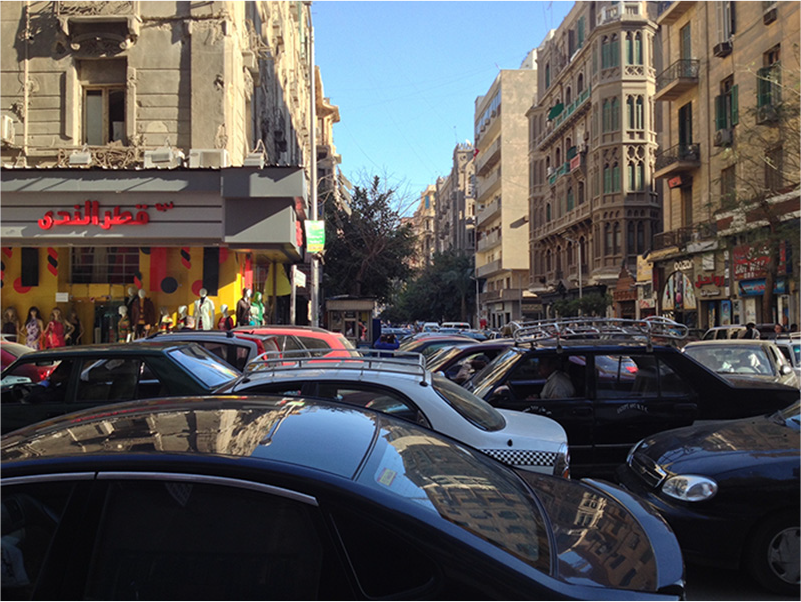
By acknowledging sound, whose vibrations are material and can be measured as infrastructures, we are able to explore vibrations as sonic infrastructures; as tools of techno-politics. Photo by Maria Frederika Malmström.
Key concepts
Displacement is not only the result of violent conflict, natural disaster, resource extraction, gentrification, political turmoil or the global war on terror. In Egypt, male political activists are perceived as a stereotyped ‘dangerous’ opponent group, criminals and enemies of the state, who must be displaced, preferably to prison or even killed, or forced to submission in other ways. In contrast to mass displacement and refugees, where people end up in concrete places, such as a refugee camp for a prolonged waiting, the actors in focus are displaced by their own regime from their home, city, even country. It is a fluid, vulnerable and unstable condition, imposed through displacement from urban places, spheres and rights. Displacement thus reflects physical, sensorial and political expulsions from polity and territory: a material as well as affective process that has wide-ranging implications for these Cairenes’ sense of safety, their life-long, embodied process of manhood, belonging and positionality. Nevertheless, previous scholarship on displacement (refugee camps) has insisted on the important analytical linkage between processes of displacement and emplacement as both historical products and ongoing projects (Malkki, 1992, 1995) – increasingly recognising that displaced people are not merely out of place but, through their presence, practices and experiences, that they also remake places (Western, 2020a), as we will see below through ethnographic examples.
Thus, there is a close link between displacement, emplacement, state power and masculinities in today’s Egypt. Hafez’s (2012) discussion of multilayered patriarchal power, reversal in the collective consciousness and uprisings in Egypt is valuable here. She draws on Kandiyoti’s term patriarchal bargain (a form of negotiation with patriarchal power to describe the relationship between the genders), but the bargain is used here to describe a patriarchal relationship between Egypt’s people and its leaders. She points out that in classic Middle Eastern patriarchy: the honor, prestige, and power of the patriarch thus derive from his abilities to provide for as well as to control and ensure the obedience of the members of the group. In this regard, a bargain is struck—not simply one of reciprocal exchange (one of allegiance in return for sustenance) but also one in which inequality is maintained, internalized, and ensured through methods of control. (Hafez, 2012: 38)
She goes on to observe, ‘What the events of this uprising [2011] have revealed is that notions of masculinity undermined by a repressive regime have observably shifted the terms of the patriarchal bargain between genders and ages and between the state and its people’ (Hafez, 2012: 39). Wahba (2020: 62) in turn asserts that: The Arab Spring defied the exceptionalism of the Arab region and produced images that contradicted the traditional tropes of the Arab street and the discourses of masculinity in crisis …. Two main tropes, the baltagi [thug] and the terrorist, have been masterfully used by the Egyptian state in a manner that feeds into and is in synchronization with a global affective economy of fear.
Ryzova (2020: 317) writes about the so-called baltagi that Wahba mentions above. On these men from low-income backgrounds, typically from informal neighbourhoods, and the middle-class men I write about, she writes that on the front line, ‘their embodied experiences met, and class momentarily melted in the face of experience’. Furthermore, ‘they soon realized that they had been fooled. No amount of peacefulness, no amount of sacrifice and death, was enough to bring about a better tomorrow’ (Ryzova, 2020: 316).
Nevertheless, among many pro-Sisi supporters, during his first years of rule Sisi was perceived not only as a strong male military leader, a firm and calming father, but also as the handsome, well-mannered, sexy man and paradigmatic spouse (Malmström, 2019; see also Naguib, 2020). Ghannam’s (2013) findings in Egypt also reveal ‘the parallels people made between a proper government and a proper man: protection, support, and provision’ (e.g. Amar, 2013; Inhorn, 2012; Kreil, 2016; Rommel, 2017; Schielke, 2015). The nationalist narrative is indeed highly gendered, as Naguib (2020: 51) has stated: . . . . the nation is modeled after the family, and the masculine qualities of the military leader are contrasted with the femininity of a dependent nation, imagined as the passive object of the masculine patriotic act of salvation and protection. Patriarchal binaries are projected onto the relation between state and nation, military and civilian, thereby demobilizing and subordinating the people to autocratic military rule.
There are still many gaps in critical Middle East masculinity studies, as Ghannam and Amar note, as well as in affect studies (Wahba, 2020). Affect can be understood as: the potential of an entity or event to affect or to be affected by another entity or event. From vibes to vibrations, this is a definition that traverses mind and body, subject and object, the living and the non-living. One way or another, it is vibration, after all, that connects every separate entity in the cosmos, organic and nonorganic. (Goodman, 2009: xiv)
Few studies have investigated masculinities through the anthropology of vibrations (affect), relevant for this article, with a small number of exceptions, such as Khoja-Moolji (2016) who writes about how sounds play a critical role in the production of gender and race. Especially inspirational in relation to my exploration of masculinities and displacement is Filipović (2018), who examines how straight masculinity and queer subjectivities are being made in affective relations to the sounds within various spaces, challenging the boundaries between the private and public in the urban soundscape of Belgrade.
Fieldwork in Cairo
My networks in Cairo for this article are men who are politically active Cairenes, sometimes referring to themselves as intellectuals or the new bourgeoisie. It is problematic to describe the type of manhood that characterises this category of activist men, since there are always differences within one group. Masculine ideals that many uphold and embody are to avow Marxism and Sufism. It is key to be perceived as intellectual, political and pro-feminist, to have a girlfriend(s) and to marry later in life, to party, to know the cool people and places and to live downtown. All of these ideals are opposite to the ones desired by the regime. The state loves obedient, conservative, hard-working and non-reading (moderate) Muslim married family men, who live outside the city. The activist manhood ideals mean a potential united political opposition and threat.
During my fieldwork, 2 I listened to the soundscapes 3 of displacement in the context of censorship, the war against ‘terror’, resistance and a police state. I have investigated how sounds contribute to an exaggerated sense of displacement and tension in the country, as well as to a collective and individual loss of hope of an imagined new national home. I have also paid attention to how sounds and sonic resistance work towards strengthening peoples’ sense of belonging and public intimacy. Primary sites of sonic investigation have been (home) gatherings, cafes, bars, clubs and streets (Figure 2). I have focused on the way my interlocutors’ talk and express their feelings, and on how sound both reflects and helps generate affective states, including bodily postures, in relation to the past, the present and the future. I have also followed women and men in various situations and places, engaging in what I have termed ‘sense walking’, where I tried to experience the milieus in an inter-sensory way, instead of merely focusing on sight. Through this, I have been able to ‘listen in’ to events as they unfold, to the sounds of power and violence, to voices whose testimonies are silenced by dominant narratives and to cultural expressions of uncertainty and conflict. In light of the politically sensitive nature of the subject matter, I have decided not to provide any further information about my interlocutors in order to ensure their safety. Because of the precarious security situation, it is ethically problematic to present detailed ethnographic findings, and I have therefore selected them carefully.

Cafes, pubs and nightclubs in Cairo have great sonic political significance. Photo by Maria Frederika Malmström.
In a general sense, there are ever-present sounds and sonic infrastructures in the cityscape of Cairo that are intimately connected to masculinities: for example, the car horn associated with male drivers (see Figure 1; cf. the film
The sonic state
The nationalist discourse intensified in Egypt after the 25 January Revolution, with a peak in 2013 after the ousting of Morsi, and a military leader cult appeared with the then-Minister of Defense, Sisi. There are many similarities between the current cult and the one ‘that cultivated around the figure of President Gamal Abdel Nasser (1954–1970) – who had also been among a group of officers staging a military coup in 1952’ (Naguib, 2020: 40). For his followers, Sisi became important for a sense of dignity, national belonging and self-confidence (e.g. Al-Ali, 2002; Joseph, 2000), but for political activists he embodied displacement and failure. Sisi’s post-2013 regime imposed a qualitatively new type of sonic-rhythmic rule that caused affective vulnerable states. It was an altered sonic rhythm, especially during the beginning of the curfew in mid-August 2013 (in the aftermath of the largest massacre of demonstrators in protest history when Egyptian security forces raided two camps of protesters in Cairo). In odd contrast to the quiet during the nights, during these first days various kinds of sounds could be heard, such as shootings outside as well as sirens and low-flying, circling helicopters and military aircrafts. The sharp contrasts between war sounds and the strange silence of empty Cairo streets produced fear, danger and unfamiliarity that I assert exaggerated people’s sense of displacement and still have an effect today. It was a clear rupture in time and in the known. The sound of silence and the changed rhythm created a loss of navigation and a temporary lapse in orientation. Sounds, or the lack thereof, stimulate, disorient, transform and control. Infrastructures, as Larkin (2013: 329) points out, are ‘matter that enable the movement of other matter’ and are the Egyptian state’s tool of expulsion. Consequently, the Egyptian state performs both concrete and symbolic sonic violence, where changes of rhythm and frequency are key. All of these (non-)sound systems operate at auditory, corporeal and sociocultural frequencies. Here I am drawing on Goodman, who has explored the potential sensations of sonic intensity and the moods they provoke among populations, for example fear induced by sound infrastructures, using examples of sonic booms over the Gaza Strip, musical torture in Guantanamo Bay and the US Army’s anticipative strikes in Iraq. Goodman (2009: xiv) suggests that: ‘the sonic weapon does more than merely produce anxiety. The intense vibration literally threatens not just the traumatized emotional disposition and physiology of the population, but also the very structure of the built environment’. Hence, forces of affective sonic infrastructural politics, imposed by the potent Egyptian state, have been circulating and moving in and out of bodies in times of penetrating uncertainty, not least during the summer of 2013 and the autumn of 2019 (Malmström 2019; cf. Collier, 2011). It is difficult to resist or to ignore the power of sound from the state, since the sonic vibrations penetrate the porous walls of the home, thereby destroying any borders between the outside and the inside.
The sonic regulations are a crucial part of authoritarian statecraft in Egypt, as shown above. Let me provide two detailed examples of how this happens in post-2013 Egypt. Only 10 days after I arrived in Cairo, during the autumn of 2017, I met a group of men at a downtown cafe in Cairo who all work for NGOs. One of the men warned me at the very beginning of our chat that I needed to take a lot of care, since we were all being monitored. He meant our phones of course, but he also emphasised that we were being observed at cafes and in all other public places. The other example shows how the state also penetrates the walls of the home: ‘Move these away!’. Our phones were placed on the table in front of us as always when we were talking. Suddenly, my friend Mohamed abruptly burst out that our mobile phones must be moved away from where we were. He looked very nervous; he had already been talking about sensitive topics. After we had moved our phones to another room, he said: ‘I never felt or thought about something like this before …’. He stated that Sisi did not give any space to the people, as Mubarak had, but instead symbolically strangled the throat of every Egyptian. Mohamed said in a low voice: ‘They are really paranoid. Really!’.
The new type of sonic-rhythmic rule imposed by President Sisi’s post-2013 regime also involves (and some examples will be fleshed out later): forbidding particular music or detaining artists (e.g. Ramy Essam, Shady Habash and Rami Sidky); repeating the sound of the national anthem on the radio and TV; monitoring and thereby employing control through listening (not only surveillance of phone conversations, but also cutting communications and thereby causing disturbance and frustration to people); employing unbearably loud, repetitive sounds during torture; closing downtown bars, cafes and bookshops; and silencing the iconic Tahrir Square during the anniversaries of the 2011 revolt, thereby sonically controlling and limiting parts of the cityscape of Cairo.
Hence, sonic infrastructures take hold of some male bodies. These and other sonic infrastructures of the state are connected to how gendered bodies are excluded, un/remade, produced, expressed and negotiated, as will be elaborated later. Sonic infrastructures exist as a kind of techno-politics that delimit what kinds of sounds and subjectivities are possible (cf. Anand et al., 2018; Larkin, 2013). The role of sound in the process of spatial identification is in this context explicit (cf. Peterson, 2010). It shapes both the city and its residents. Sound moves through bodies, and it has, through its vibrations, the possibility to change both frequency and rhythm (Connor, 2004; Merleau-Ponty, 1968). Additionally, the vibrations of sound have a unique power to induce strong affective states, including heightened states of attention, paranoia, suspicion and anxiety (cf. Malmström, 2019).
Sound, spaces and matter
Techno-politics do not only delimit masculine activist subjectivities. Through practices and performances, infrastructures are repurposed to make counterpublics, constructing themselves audible as subjects (Western, 2021). In this section, I have chosen to investigate different sonic infrastructures where the tension between control and resistance is distinct. The three key examples discussed in this section are prisons, phones and the cityscape in relation to political activist manhood. I assert that there is no distinct separation between bodies, things and cityscapes; instead, these are intimately interconnected – a thick entanglement – and the transmission of affect constantly flows between matter, space and place. We will follow how these men are striving to be desired and respectable and to make home, through the sonic, while being displaced at the same time.
The prison is a space filled with both victimhood and agential acts. The majority of the men I have collaborated with have been detained and/or imprisoned. Some of them have endured several months or a year in an isolated cell, and many were denied family visits and were exposed to torture, including acoustic violence (see also Papaeti, 2020, for the institutionalised use of music and sound in torture). However, the isolated cell is also a space of unwanted silence. So, how to stay agential, sane and safe? How to make home in displacement? One way is to make sound or listen to the sounds inside and outside the cell. Ahmed told me that he was in solitary confinement for several months (except when his family visited him every second week). The guards allowed his family to give him books and so he read them aloud to stay sane, since the sound of his voice made him feel less alone. Another man, Mustapha, who was permitted a smaller network than Ahmed, made friends with the cockroaches in his cell. He began to listen to the sounds of their movements. He even took care of them by feeding them his own hair. To avoid further severe torture, he avoided speaking to the guards when they entered his cell. One common punishment, former prisoners informed me, was for the guards to not touch them for prolonged periods, but instead have them listen to the sounds of fellow prisoners being tortured or even force them to witness that torture with their eyes and ears, for example the electrocution of tongues or genitals. I assert, not least after listening to many of my interlocutors’ narratives about their lived sonic experiences in prison, along with other scholars in the field, that when one body is tortured, all bodies are tortured, since even when the torture is not witnessed directly, it is most probably heard and witnessed aurally. It is a sonic infrastructural torture. Abu Hamdan (2016) also discusses the torture of the collective body, but in Syria: 4 ‘The prison is really an echo chamber: one person being tortured is like everyone being tortured, because the sound circulates throughout the space, through air vents and water pipes. You cannot escape it’.
Lived sonic experiences in prison, as well as the lack of desired sound experiences (cf. Cusick, 2013; Parker, 2019), not only carry information but produce the listener’s sense of self. In addition, infrastructural sounds in prison not only define the daily rhythm from the night rhythm or indicate activities (e.g. the footsteps from the guards or their keys jangling might mean it is time for food or for visitors), but may also indicate danger (such as further interrogation or torture). Moreover, the noises may create disequilibrium (through shouts of guards, screams of fellow prisoners or the slamming of doors), as well as the sense of an unpleasant ‘home’ or at least a sense of predictability. The sonic atmosphere of prisons is a punishment (cf. Parker, 2019) but may also be used as a form of resistance. Rice (2016) shows how UK prisoners shouted to locate one another and connect in an unwanted prison environment. The acoustic is part of the orientation of space, where the prisoners learn to navigate their surroundings, even if they are immobile. They learn to differentiate between different sounds in relation to their fellow prisoners, such as whispers, mutterings, screams or other corporeal sounds. Hence, these men are able to communicate with each other and to share information. However, they also demarcate space and claim territory by, for example, intentionally (or not) starting ‘lengthy and severe disturbances of one another’s sonic space’ (Rice, 2016: 8). Papaeti (2020: 9), in her work on torture survivors of the military dictatorship in Greece, discusses ‘how detainees in solitary confinement faced with imposed silence reclaimed agency through humming, whistling or even coded knocking on the wall’. In Egyptian prisons, whispers have a specific meaning. One common agential act, my Cairene interlocutors told me, is for prisoners to whisper their names to their neighbours, so that if one of them is released before the others they can contact the families to let them know the imprisoned ones are still alive. However, the family may not believe the friend after such a long time has passed, or they might have already buried (and grieved) a body they thought was their loved one.
The ambiguity of familiar materialities such as sound devices (phones and computers) may fundamentally alter human relations and actions. Suspicion thrives when the familiar sphere is infused with ambiguity; when things and experiences that induce normalcy or monotony simultaneously project fear and vulnerability. Suspicion is employed by my interlocutors as an agential navigational act, where sound (or the lack thereof) is a vibrational infrastructure that must be navigated. Already in 2014, the suspicious government developed a mass surveillance system of private conversations (and social media) while cooperating with an affiliate of an American firm named Blue Coat that focuses on cyber surveillance and spying (Ezzat, 2014). Although the company distanced itself publicly from the Egyptian state in 2014 (Frenkel, 2014), it was still part of the government’s surveillance partners in 2017, by then having been bought by the company Symantec (Morgan, 2017). The sonic control of phones is a prevalent tool of Egyptian state surveillance. Phones are monitored, particularly if you are a political opposition activist, thinker, writer, academic or journalist, or if you are perceived as an enemy of the state, which means that these targeted groups never use phones for politically sensitive talks. To give one example of agential acts, men told me that they delete information – with help from outside – once detained. One man, a famous member of the human rights community in Egypt who I have known for a couple of years, told me that the second he was detained, his phone transformed into just a piece of plastic. People from outside prison assisted him and deleted all files, documents, calls and message history on his phone, as well as his social media accounts, including Facebook. Hence, in this example we can explicitly follow the transformation of the sonic into silent objects. Another short account is that of Amr. He approached me at a downtown bar and asked if we could meet in the near future to catch up. This was 2017 and Amr was then just out of prison, where he had spent three and a half months. When he gave me his new number I immediately noticed his very simple Chinese phone; a phone that is a sign of sonic protection. This plain version is much safer than a smartphone, as it is much more difficult to monitor than a more sophisticated device due to its lack of GPS, etc. After Amr left the bar, several of my friends who also know him warned me not to meet him during my planned time in Egypt. They informed me that Amr was not only monitored in a ‘normal’ sense, as they were, but much worse. He was additionally displaced. It would be much too dangerous for Amr – as he should know, they underscored – but also for me. The last example of state surveillance and resilience is the following: I overheard a phone call during which my friend Ahmed suddenly shouted out to his male friend: ‘Stop talking about this! Stop talking about this on the phone’. He later explained to me that the friend, who works for the government, had lost his temper and burst out in anger about all the corruption that was going on. By shouting this warning, Ahmed told me that he was informing his friend that he was being monitored, to protect him, but that he also wanted to show the security apparatus that he was well aware that they were monitoring him. Simultaneously, I was surprised that the same people talked about sensitive matters much more than would be safe to on the phone or even in public places, where they easily could be caught if anyone overheard them. I later understood that these men exposed themselves to danger and broke their own rules to stay sane, to be masculine and to stay close to their own dignity and what they believe in. We can by the above scenario and the following ethnographic case follow the blurred lines between struggles of displacement and acts of space making. Ali told me about something uttered by one of his friends, an old revolutionist, when he found out that Ali was in contact with the (by then) opposition leader and lawyer Khaled Ali. The friend said: ‘Do not hang out with him anymore! Are you crazy? You must stop texting him and calling him and please do not meet him in public. It is way too dangerous now’. But Ali did not care; he said that he was only more careful and alert if they met in public places. Other men taught me that they employ sounds of confusion, such as code names for places to meet (e.g. ‘we’ll meet later at work’, meaning later at a specific local bar), which leads us into the third section – on cityscapes.
Thirdly, it is vital to have the skills to resist and navigate the cityscape in relation to sonic infrastructures: every step and movement away from the big ear of the security regime is in fact survival and a strategy of maintaining as well as reclaiming space. All public places are equipped with surveillance cameras. I was also told that many of the downtown cafes and bars have hidden audio recorders in them too. I do not know if the latter is true, but I do know that Egyptians are well aware of the current Orwellian surveillance system, including the local spies, the ones who pretend to be normal customers. One common strategy of political actors and activists I know is to leave devices on cafe tables (if they can afford to; many Egyptians have more than one phone) and then go for a short walk before starting the dialogue far away from the mobile phones. The Cairenes I know have also turned to apps with encryption, like Signal or WhatsApp, and sometimes place their phones in metal sound boxes during meetings or leave their phones at home to avoid the security apparatus listening to them. At the same time, there is a lot of frustration. The below quote is from a journalist friend of a friend I met at a cultural event at the end of September 2017, a man who is working for a private TV channel. He mentions that, ironically, Egyptians try to hide their conversations from the government’s security apparatus by using WhatsApp, while at the same time the same security apparatus uses WhatsApp to reach out to journalists with daily ‘censorship’ texts: I cannot stand this any longer and I cannot do anything! There is no point playing the hero. Either I must stop working as a journalist and be without a salary, which is impossible because I need to support my wife and children, or I must continue following the orders of this crazy state and continue to be as frustrated as I am today. You know … I am receiving WhatsApp texts from the government every single day, with orders about what to talk about and not to talk about.
The men I know undertook different sonic strategies, as described above (muting, encrypting, coding, avoiding smartphones, etc.), but also acted to carve out secure sonic spaces in the cityscape: if there were less sensitive things to talk about, they selected one of the local bars where they recognise the ‘normal crew’. If there were any unknown faces or potential new spies it was immediately known to them and they were extra careful, not only in relation to the power of the ear but also to the use of cameras. Another known strategy was to use the tool of ‘culture’, like cultural centres and hip cafes. These are spots where people are supposed to enjoy various cultural events, but in reality they also provide a space for exchanging political thoughts. If there were semi-sensitive matters to talk about, people might use their homes for the meeting, but if the matter was too sensitive it would be better to meet late at nightclubs, because these places were protected by the loud sonic volume. Furthermore, nightclubs were places where it looked like people were just running into each other, rather than having made an appointment. My interlocutors also claimed space through loudspeakers that speak aloud the music genre of
Evidently, gendered activist subjectivities are contended and fought for at the street level, where spaces of cafes, local pubs and nightclubs in Cairo thus have great sonic political significance. The political dialogue that takes place every evening in pubs and cafes is an explicit repetitive sonic agential act against displacement. I assert that the aesthetics of repetition constitute a social force (cf. Peterson, 2010). Informal areas function as sonic infrastructural spaces of political opposition; as spaces for sonic sharing of and acts of listening to (as acts of resistance and navigation) the latest news (e.g. about people who have recently been detained/tortured); as spaces of daily making of desired political manhood through the voice and gestures; as spaces of imagined safety; as spaces of relaxation; and as spaces of belonging and a ‘public home’ in the city. Simultaneously, these places are heavily sonically monitored by the state (spies might be the waiter or the guest sitting next to you, while surveillance cameras are placed both inside and outside). The state has, in recent years, closed most of the key spaces of opposition, not least huge ‘outside’ cafes, because political activists should not be able to gather in large crowds and must be removed from downtown spaces, since they are perceived as threats to national political stability (or rather to the current rule). These crowded and loud places, like all others, served affordable strong coffee and tea and offered water pipes. But in contrast to other cafes in the city, these places were huge and had no rooms ‘inside’; instead, they spatially covered large spots downtown with their simple plastic chairs and tables in bright colours.
Manhood: The power of the voice
What does political manhood (and the loss of the same), displacement and emplacement sound like? As mentioned in the above section, my interlocutors claimed sonic belonging, space and their corporeal selves through discussing politics in public spaces or through political dialogues at home gatherings. To understand how these male political activists are constantly trying to resist displacement, reclaim space and make themselves into alternative men (and thereby resist military manhood), despite the potent ear of the state and the regime’s constant closing of these downtown spaces, we must pay attention to the sonic materiality of voices. Understanding voices as sonic matter is worthy of attention in order to explore those voices’ social and political significance, resistance and the subject positions that these men repeatedly request in social interactions (cf. Papaeti, 2020). The daily making of political manhood is dependent on immediate social responses from a gendered audience. As Western (2020: 17) notices: ‘Voices carry the border within their timbres. Voicing presence in displacement is courageous as well as creative’. However, the autonomy of the voice from the subject might also be of importance here. Eisenlohr (2018) analyses the otherness of the voice among Mauritian Muslims and especially its role in religious cosmologies, where the reciting voice is the site where God reveals himself. Among the male political activists in Cairo, the autonomy of the voice can instead be understood as the site where ideology reveals itself. I am here inspired by Eisenlohr’s (2018) concept of sonic atmospheres. Sonic atmospheres, as a contrast to Schafer’s (1977) definition of soundscape, underscore the generative capacities of the sonic; the somatic intermingling as well as the temporality of sound (Eisenlohr, 2018). If we employ Eisenlohr’s notion of sound as atmosphere, 5 we can follow ‘how bodies intermingle with and thereby perceive atmospheres … The diffuse potentialities of the voice are then something that others can literally bathe in’ (Eisenlohr, 2018: 90).
During my recent periods of fieldwork, I observed how men performed, sonically protested and claimed belonging through their body language and voices in cafes and bars – as always. I have paid attention to how and to what extent the men participated in political conversations, as well as how they made claims of power or the lack thereof. Voices are, as Weidman (2014: 40) suggests, ‘deeply felt markers of class’, but also markers of political belonging in relation to desired manhood. I noticed that the men I have spent time with always had lively and animated discussions. I observed how much they gesticulated to underscore their messages, and at the same time to show their status and manhood in the group. The political conversations were intense and in a rapid tempo, and also very loud if not on too-sensitive topics, though sometimes they ignored the security risks and continued to speak at loud volumes, as mentioned above, not least because to be (politically) brave is to be a manly man and thereby they created space at the same time as they challenged displacement. Both the volume and the gestures are in this particular context acts of resistance to displacement (they are frequently detained for less).
For me, it was key to listen not only to what the men talked about, but to
Kapchan has introduced the term ‘sound body’, which is defined as a body with multiple rhythms and orientations, and where ‘[active] listening is a port of entry as well as a method’ (Kapchan, 2015: 37): ‘The [porous] sound body is a material body that resonates (with) its environment, creating and conducting affect’ (Kapchan, 2015: 41). She suggests that ‘if sound is vibration, and vibration is territory, then the sound bodies re-orient space and place through their aesthetic practice’ (Kapchan, personal communication). It is possible to use the term ‘sound body’ in relation to the sonic materiality of voices of the male political activists as well. Just as ‘the bird sings to mark its territory’, to use Deleuze and Guattari’s vocabulary, these actors resist the repressive state and create their own territory (e.g. selecting new cafes or initiating home parties), even if the Egyptian regime tries to constantly alter and control these male political bodies through limiting and silencing their sonic vibrations through sonic infrastructures (cf. Malmström, 2014).
Making masculinities and carving out a home in the era of political repression
Masculinity is not only produced through ideology, but through affect, as we all know. This article has worked towards elaborating our understanding of how the materiality (or vibrations) of sound and displacement plays a central role in the processes of masculine subjectification. I have also shown that engaging in the sensorial ethnography of urban displacement in Cairo makes explicit the development of a neo-patriarchal state, its repressive politics and how the sonic infrastructures not only are sonic instruments of biopower (Cardoso, 2019a, 2019b) but also operate on the bodies of the men I have collaborated with.
Sounds in participatory democracy depend on collectivities (Kunreuther, 2018), but so too do those in societies ruled by dictators. Through its emphasis on sonic infrastructures as a lens for approaching displacement, this article helps us move beyond conventional approaches to peoples’ experiences of displacement, opening up space to investigate the non-conscious forces that have a profound influence on our thinking and decisions in moments of intensity. Attention to the body, our senses and public affect foregrounds the role of immediate and experience-based forces during times of chaos, insecurity and political instability (Malmström, 2014) or forced statis. As we know by now, the institutions of state power in Egypt employ sound as a political representation while controlling, monitoring, limiting, threatening and making certain men through sonic infrastructures (Figure 3). It is an ongoing sensory process produced through the politics of the ear, to use Hirschkind’s (2004) terminology (cf. Trnka et al., 2013), while at the same time the men in focus are constantly contesting and negotiating normative state-desired tractable gendered bodies(cf. Anand, 2017; Von Schnitzler, 2016). My argument here is that the Egyptian military state employs sonic (as well as other) strategies to unmake the alternative masculinities that became explicit and grew during and after the 25 January Revolution. The Egyptian regime puts all of its efforts into creating an environment that ‘gives rise to a sonically constituted sense of self’, as Rice (2003: 4) phrases it in the hospital context. I assert that the state apparatus, in order to stay in power, constantly strives to discipline and shape these particular male bodies into obedient military nationalist masculinities through sonic infrastructure.

The institutions of state power in Egypt employ sound as a political representation while controlling, monitoring, limiting, threatening and making its citizens through sonic infrastructures. Photo by Maria Frederika Malmström.
Even if the state’s aim is to produce specific masculinities and eradicate unwanted ones, the men in focus are definitely not passive, as I have shown by different examples throughout this article. These Cairene men sonically navigate the increasingly state-controlled cityscape; they claim space, they produce distinct urban spaces and thereby they reclaim and maintain what has always been their space (until the state’s displacement of movement). They do so not only to be able to resist and stay as safe as they can, but also – from their point of view – to make themselves into desired and respectable men and to make home, through the sonic, while being displaced at the same time. As Appadurai (1986) put forward, in the context of displacement, home emerges as a significant trope. The Cairene men I know try to listen to their own created worlds, to stay silent and deaf to the sounds of the regime as much as possible. The aim is to constantly resist by vocalising their existence, re-making themselves through listening to their fellows and acting through an embodied social self through the sonic. Yet, it is impossible to make oneself into the person you were at the point of the 25 January Revolution, as Butler (1990, 1993) and other scholars have taught us: it is impossible to cross the street exactly like you did last time, which means that alterations are continuously made (for better or worse). The way in which activist males in Cairo are disciplined daily to listen to the autocratic regime’s distinctively shaped cityscape influences how these places and spaces sound and resound (cf. Ree, 1999).
Footnotes
Declaration of conflicting interests
Funding
ORCID iD
