







Abstract
This study investigates the harm reduction strategies that people who use prescription stimulants engage in to avoid or manage the side effects from their substance use.
Psychostimulants, such as amphetamine salts and methylphenidate, are commonly produced as prescription medication primarily for the treatment of attention deficit hyperactivity disorder (ADHD), due to their ability to reduce core symptoms of hyperactivity, impulsivity and inattention (Furman, 2005). Being the primary pharmacological treatment for ADHD (Kooij et al., 2019), the prevalence of medically used prescription stimulants is high, estimated at around 4.5% of the U.S. population (Compton et al., 2018). This rate has been estimated to have increased (Board et al., 2020), especially during and following the COVID-19 pandemic (Board et al., 2020; Chai et al., 2024).
Additionally, approximately 0.6% to 2% of U.S. adults report past-year nonmedical use of prescription stimulants—that is, use without being prescribed or taken differently than as prescribed (Compton et al., 2018; Faraone et al., 2020; Substance Abuse and Mental Health Services Administration, 2016). Qualitative investigation has found psychostimulants have been used amongst college students as cognitive enhancers because of their effect on memory, concentration and learning performance (Jensen et al., 2016). Additionally, individuals have reported increased energy and interest in learning after taking prescription stimulants, allowing them to work for long periods (Vrecko, 2013).The beneficial effects of prescription stimulants, however, also come with side-effects. Side-effects of prescription stimulants are extensive and include symptoms such as elevated blood pressure, irregular heartbeat, nausea, anxiety, insomnia, and decreased appetite (Weyandt et al., 2014). These side effects have been reported for both medical and nonmedical use (Smith et al., 2017). However, we know little about how people who use prescription stimulants seek to reduce the harms they experience from their use.
Previous research has investigated how people who use drugs have engaged in strategies to reduce their drug-related harm among people who inject drugs (Boucher et al., 2017; Nguyen et al., 2022), people who use opioids (Corser et al., 2022), and people who use MDMA (Sharifimonfared & Hammersley, 2020; Span et al., 2024) and methamphetamine (Wilkerson et al., 2015). Harm reduction strategies reported by participants in these studies included drug checking (Goldman et al., 2019), monitoring their use (Brunt, 2017), needle exchange and engaging in counseling (Gomes & Vecchia, 2018). However, despite their prevalent use, the evidence base about harm reduction is lacking among people who use prescription stimulants, with existing findings being isolated anecdotes, or found peripherally in the investigation of other aims (Aikins, 2012; Kecojevic et al., 2015; Silva et al., 2013). Additionally, there is a general lack of information online about harm-reduction measures individuals can use when taking these medications as prescribed. This is especially relevant as people who use stimulants as prescribed have been found to report side effects more frequently than people who use prescription stimulants nonmedically (Smith et al., 2017).
Understanding the real-world harm reduction practices of people who use drugs can be beneficial across a spectrum of professional settings. In this study, we focus on bottom-up harm reduction strategies, which refer to the self-initiated practices that individuals engage in to prevent or mitigate the harmful consequences associated with drug use (Allott & Redman, 2006). Examples of these strategies include monitoring dosage, engagement in community services and maintaining a healthy lifestyle (Boucher et al., 2017; Greenspan et al., 2011). We also adopt an expanded view of harm reduction that encompasses not only immediate, near-use risk-mitigation strategies, but also regular daily-living routines like self-care and healthy-lifestyle practices (sleep, nutrition, hydration, exercise; Boucher et al., 2017; Hardon & Hymans, 2016) because they may mitigate stimulant-related harms over time.
These practices reflect the agency and self-care practices of individuals who use drugs, emphasizing their active role in managing their health and well-being (Boucher et al., 2017; Drumm et al., 2005). They are distinct from top-down interventions, which are typically delivered by institutions or professionals (Span et al., 2024).
Prior research has documented bottom-up harm-reduction practices generated and circulated by people who use drugs. A
Alcohol and other drug counselors can better support individuals who use stimulants nonmedically, offering targeted advice on minimizing risks. Mental health clinicians, general practitioners, and other substance use professionals can apply these findings to improve patient care and support, acknowledging the diverse ways individuals use and manage their stimulant use.
The goal of the present study was to qualitatively explore the self-reported experiences and harm reduction strategies described by people who use prescription stimulants The research question guiding this study was how do individuals who use prescription stimulants describe and engage in bottom-up harm reduction strategies?
To investigate this, we collected and analyzed social media data (Reddit), an avenue that has been increasingly used in substance use research to understand the behaviors of individuals (Chi & Chen, 2023). Social media offers a unique opportunity to access naturally occurring data, where individuals may openly discuss their nonmedical prescription drug use in ways they are often unwilling to disclose to healthcare professionals (Ali & LoveJennifer, 2022; Kim et al., 2017). Therefore, this study will analyze this discussion qualitatively to explore the nuanced, bottom-up harm reduction strategies employed by individuals who use prescription stimulants.
Method
Site Selection
Reddit is the largest online English forum board, with over 52 million daily users (commonly referred to as redditors; Patel, 2020). Reddit is comprised of thousands of content-specific digital communities known as subreddits. Many of these subreddits contain discussions related to the use of prescription stimulants, each varying in their purpose and content. For example, the subreddit r/ADHD focuses on the experiences of those with ADHD, while r/drugs focuses more on nonmedical use. This diversity allows us to capture a broad spectrum of harm reduction strategies related to prescription stimulant use. To capture a diversity of experiences, we employed a multisite framework, analyzing discussions from a series of subreddits (r/ADHD, r/drugs, r/stims, and r/nootropics).
This study drew from discussion on the subreddits r/ADHD, r/Nootropics, r/Stims and r/Drugs. The largest subreddit, r/ADHD (1.5 million redditors), discusses the experiences of those who have ADHD. The subreddit provided a useful avenue for examining the experience of stimulant use among those prescribed the medication. Additionally, discussion of stimulants on the subreddit r/nootropics (340 k redditors), which discusses cognitive enhancers, was also included. Posts from the subreddit r/drugs, which has 916 k members and is dedicated to discussions on all substances, as well as from r/stims, which has 116 k members and focuses specifically on stimulants, were also examined. This selection of subreddits was expected to show the diversity of experiences of individuals who take stimulants.
This research received an ethics exemption from the University of Queensland Human Research Ethics Committee (2022/HE001469) because it did not include human participants and used publicly available data. Prior to examining the posts, the authors contacted the moderators of each subreddit informing them of the aims of the research. However, no response was received. Our use was compliant with Reddit's conditions of access at the time which stated permission is not required from Reddit to use their Application Programming Interface (API) for noncommercial use. To protect individuals’ identities, comments were obscured so they would remain unsearchable. This was done by amending grammar and spelling errors and removing irrelevant sections. Reverse search checks were employed to verify deidentification.
Data Collection
The subreddit-comments-dl (pistocop, 2022) tool was used to extract submissions made to these subreddits. This script retrieves the submission IDs for posts using the Reddit API search optimizer, pushshift.io, before extracting its content using the Python Reddit API Wrapper package.
Extractions were done between July 26th and 28th, 2022. To ensure a representative sample of discussions, we scraped a large number of posts from each subreddit: r/ADHD (
To filter out irrelevant discussion, a list of keywords was developed to search for posts about prescription stimulant use. This list included both the generic and brand names of prescription stimulants. These terms were then manually searched on each subreddit to remove those that resulted in no relevant posts. The full list of keywords can be seen in Supplemental Materials A.
Each subreddit was searched independently using R. Posts were included if they contained relevant terms in either the title or body text. The number of posts included varied between subreddits. For r/ADHD, 9.15% (
The remaining posts were then manually screened. Posts were included if they were English text-based posts related to prescription stimulants. Posts about nonpharmaceutically produced stimulants were excluded. We also excluded posts that were deleted by the poster or removed by moderators. Additionally, joke and parody posts, posts with no text (photos/videos only), and posts with less than 25 characters were removed. Inclusion rates and characteristics of included posts can be seen in Table 1.
Characteristics of Included Posts for Each Subreddit.
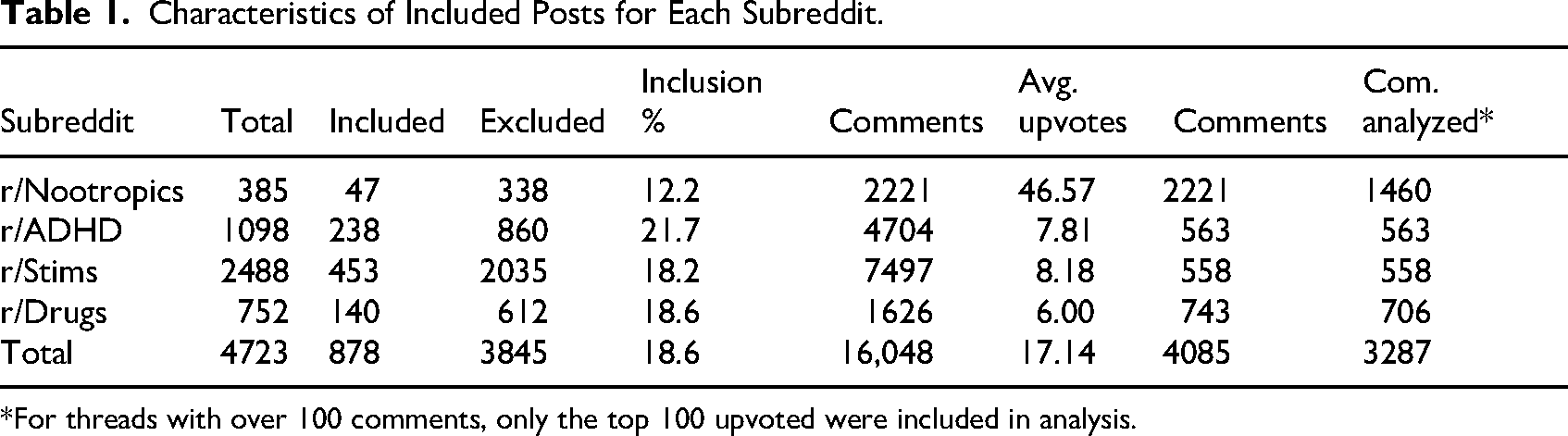
*For threads with over 100 comments, only the top 100 upvoted were included in analysis.
Randomization was conducted in R by shuffling the eligible posts from each subreddit using the sample function and selecting the first 50 for analysis. For r/nootropics, only 47 eligible posts remained after screening, so all were included. Posts were then merged with their associated comments. For highly replied threads, we collected the top 100 most upvoted comments to ensure the most representative viewpoints were captured. This was to prevent the discourse from being dominated by a few extensive threads while still ensuring a diverse representation of community perspectives and focusing on the most valued insights. These were converted into text files and imported into NVivo 12 for qualitative analysis.
Data Analysis
For analysis, we adapted guidelines from Jenkins et al. (2018) on multisite qualitative analysis (MSQA). MSQA utilizes a three-stage approach, where data are analyzed within-site, between-sites and within-site again. This approach allows us to examine the similarities and differences between discussions on the subreddits.
The first stage was within-site analysis, where discussion on each subreddit was analyzed separately. The thematic analysis approach outlined by Braun and Clarke (2006) was used to explore these discussions. Initial stages of analysis were conducted by a single coder (BJ). This began with the coder reading the dataset and noting initial impressions. After familiarization, the coder reexamined the data and the coding process began. The initial coding process was conducted by BJ without any predefined codes or themes, to capture emerging and novel insights present in the dataset. This meant actively engaging with the content to highlight emerging patterns, unique insights, and novel observations regarding individuals harm reduction behaviors. Collaboratively with another researcher (NT), the coded data were then collated into preliminary themes based on their similarity. Topics that were recurrent and held significant meaning within the dataset were coded. These themes were then reviewed and labeled. This process was repeated for all subreddits.
Following this, results were compared between sites (i.e., across subreddits). In this stage, we contrasted the themes from each subreddit to identify how harm reduction discussion varied and converged across online communities. This allowed us to identify patterns present across the entire dataset which informed the development of the overarching themes (Jenkins et al., 2018).
This stage was followed by a final within-site analysis, where the subreddits were reexamined independently to assess the suitability of the overarching themes and identify site-specific elements. Threads were then recoded deductively based on the finalized themes. The process also involved counting how often these themes appeared in posts across each subreddit. Additionally, for the theme “Use of Additional Substances,” the frequency of mentions for various substances was counted and categorized by subreddit.
Results
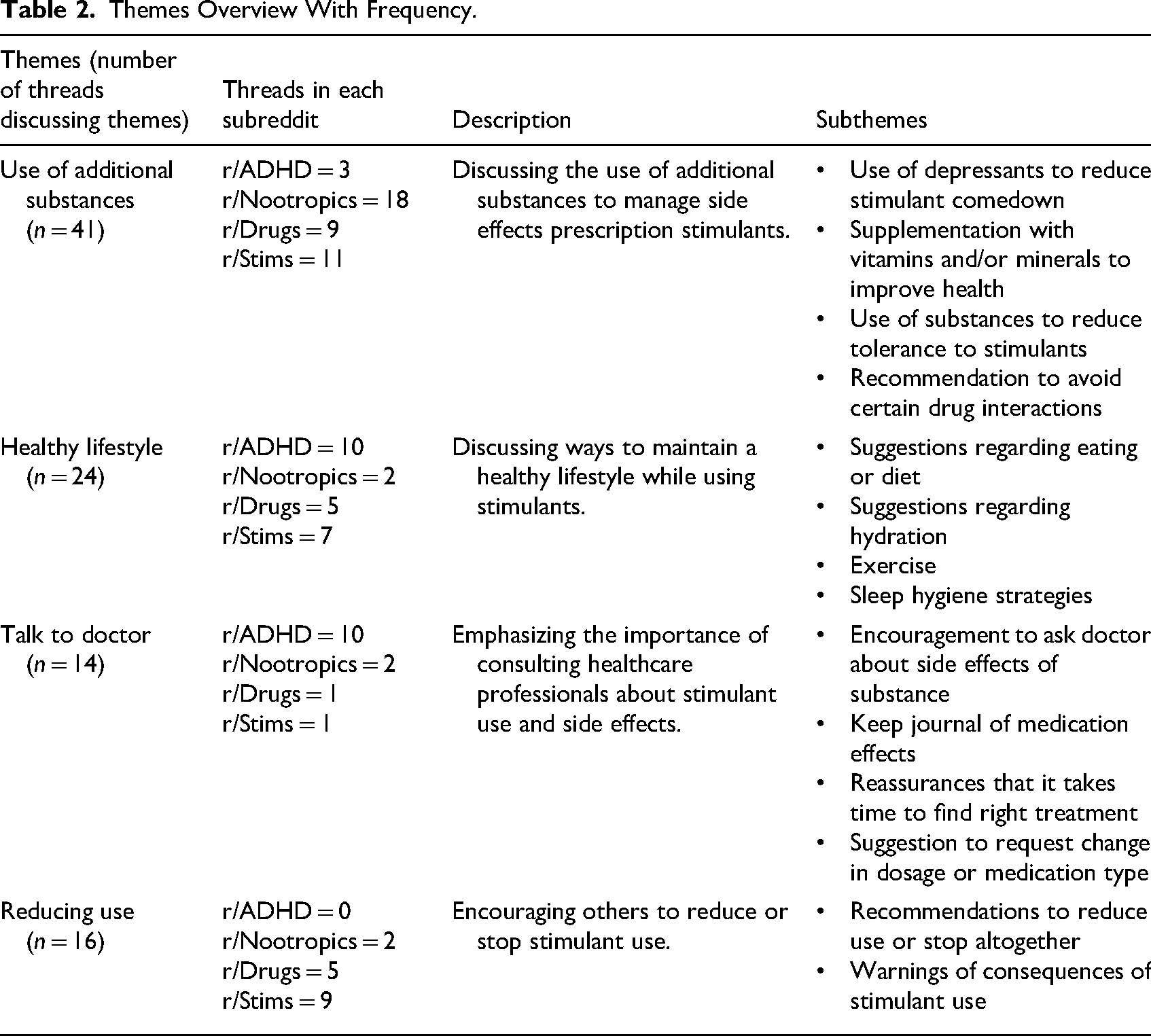
Harm reduction posts across the subreddits were primarily centered on providing practical advice, sharing personal experiences, and offering support to others. Redditors often engaged in discussions to suggest strategies for mitigating the adverse effects of prescription stimulant use, emphasizing a community-driven approach to managing their health. These posts included a wide range of recommendations. Through detailed exchanges, redditors created a collaborative environment where harm reduction strategies could be explored and refined. This analysis uncovered four specific themes: the use of additional substances, achieving a healthy lifestyle, consulting with healthcare professionals, and strategies for reducing stimulant use. The final themes can be seen in Table 2.
Themes Overview With Frequency.
Use of Additional Substances
Redditors frequently discussed substances they used or recommended to help manage the side effects. Most frequently, discussions were in reply to other redditors asking about the suitability of certain substances. On r/Nootropics, which contained the majority of substance discussions (
Redditors would typically share their thoughts on the substance, often based on their previous experiences. Some posters also linked research to support their position. When providing recommendations, posts would often describe what the substance does, instructions on dosage and unsafe interactions.
Overall, 31 substances were mentioned at least three times in discussions in the context of harm reduction. Full frequencies can be seen in Table 3.
List of Substances Mentioned for Harm Reduction at Least Three Times.
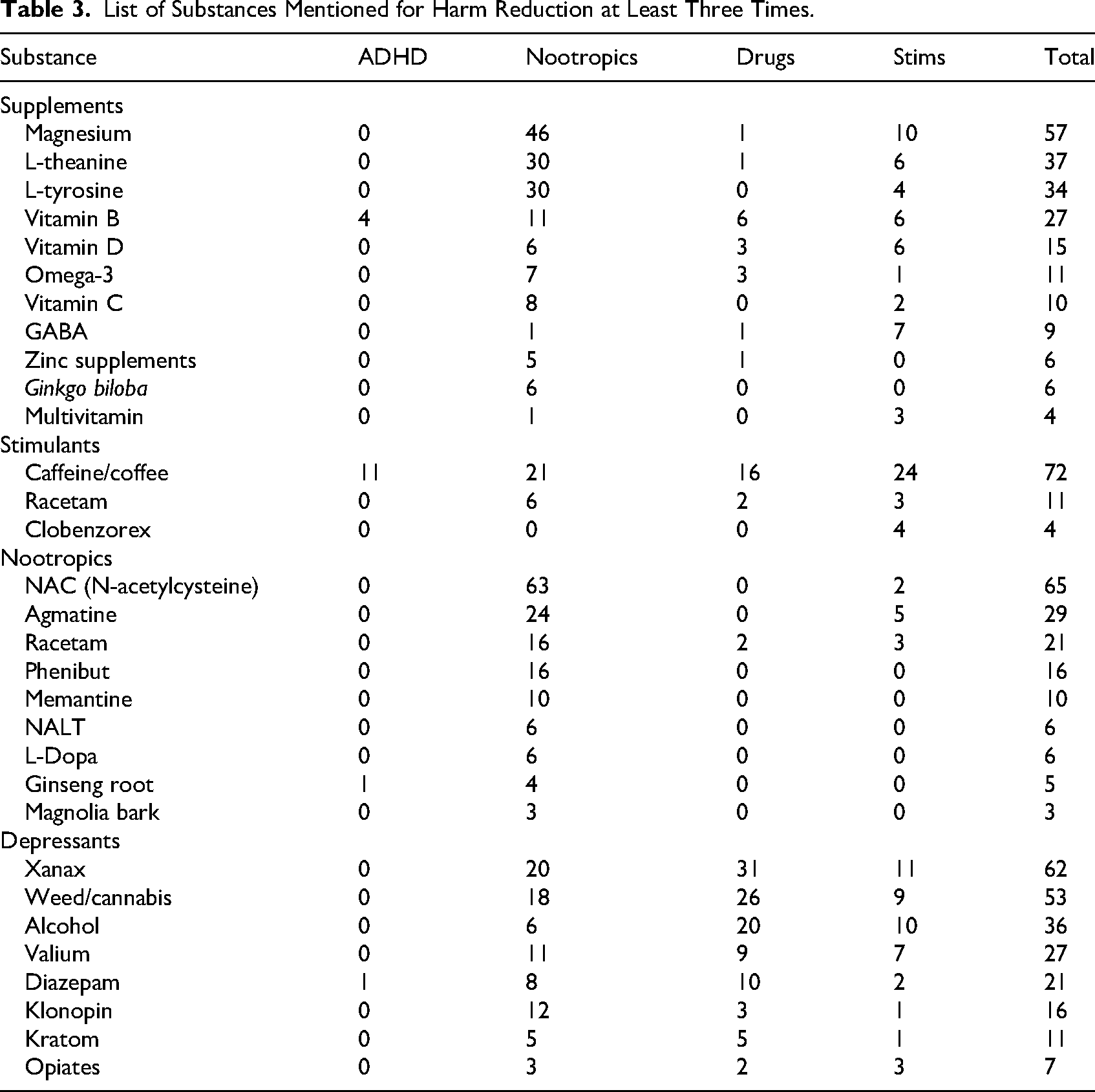
Depressants such as alcohol, cannabis and benzodiazepines were frequently discussed for their ability to reduce anxiety and physical discomfort following stimulant use. Redditors also found these drugs helpful to aid eating and sleeping. This was usually following recreational use involving high dosages. Benzodiazepines, especially Valium and Xanax, were the most frequently mentioned, especially on r/drugs and r/stims. Many reported taking benzodiazepines during the stimulant's active effect or on the comedown to reduce physical effects of anxiety and jitteriness: I would save the benzos for when you really need them with the addy. Like to relax so you can sleep or to sleep. Or only when you feel you are experiencing uncomfortable physical anxiety (r/Drugs). I’m on 30 mg Vyvanse now and the crashes can be subdued with coffee … My crashes on adderal are a lot more subtle (irritability only, no dark thoughts, no hopelessness) (r/ADHD). I took magnesium glycinate at night when I took Adderall and it helped me get an awesome night's sleep (r/Drugs). L-Theanine helps reduce anxiety brought on by stimulants. Sabroxy can potentiate them and Skullcap can help smooth out the crash in the afternoon. Lemon Balm, GABA, Magnolia Bark, and Mulungu help sleep at night (r/Nootropics). I was getting bad side effects from methylphenidate and took NAC. I was surprised by how quickly and how much the side effects went away (r/Nootropics).
Achieving a Healthy Lifestyle
Individuals across all subreddits discussed the importance of healthy living on their overall health and reducing long-term damage from stimulants. This discussion was especially common in r/ADHD ( Exercise is just as important as water or diet to make sure you’re letting [your]you’re body metabolize your meds (r/ADHD). Big protein-focused breakfast and set an alarm to remind myself to eat lunch! … Dinner a meat and a veggie. I avoid sugar and limit carbs! (r/ADHD). Keep electrolyte drinks on hand and drink them regularly. Amphetamines deplete them incredibly fast (r/Stims).
Consulting a Doctor
Individuals who were prescribed stimulants and experiencing adverse effects were often encouraged to consult their doctor about these side effects. This was most common on r/ADHD ( But, you should always consult your doctor if you have concerns about your meds. They know what they are doing and together you can find a treatment plan that works for you (r/ADHD).
Several redditors suggested keeping a journal to record the effects of the medication. This was so individuals could provide their doctors with valuable information to make informed decisions about their treatment: Keep up with the doctor, keep notes of how you feel, how they’re working and not working. It's normal to need med and dose changes (r/ADHD). I didn’t tolerate Adderall at first but was switched to Vyvanse and now handle it much better (r/ADHD).
Reducing use
The frequency and dosage of stimulant use, especially among those unprescribed, were regularly discussed and scrutinized by other individuals in the community. Under posts describing side effects from stimulant use, other individuals would commonly recommend reducing use or stopping altogether. These recommendations were typically found in r/drugs (
To encourage others to reduce their use, some individuals shared their struggles with dependence. One individual shared: I just lost everything to amphetamine addiction. … Your health, your sleep, your relationships with anyone and everyone, your job, your financial independence (that one is tough) and if you really go overboard potential lifelong consequences to your physical and mental health (psychosis, movement disorders, cognitive deficits etc…). I don’t know how to convey this next part but I will try. I was right where you are, right now, about a year ago (r/Stims). You are burning dopamine receptors already at these doses. I would try to lower it to once a week but I can see you are hooked. Lack of dopamine will punish you later. Have that in mind. You are entering a slippery slope (r/Stims). All you can do is stay strong, get the right help and support, and definitely get rid of all the medications or you will be spending hours turning the house upside down looking for that one pill. Good luck; like any addiction, it's a lifetime of staying in control (r/Drugs). Get off the stims, sleep for a month and a half if you have to. It will help with the anhedonia and to repair the dopaminergic system (r/Stims).
Discussion
The purpose of this study was to capture the diverse use of prescription stimulants described on Reddit and identify the broad spectrum of harm reduction strategies discussed. These findings provide insights into how individuals who use prescription stimulants seek to reduce their experience of harm from taking prescription stimulants. The desire for people who use drugs to actively consider and care for their health and well-being has been found broadly in qualitative research (Boucher et al., 2017; Drumm et al., 2005). This study adds previously unreported details about individuals who, while planning to continue using prescription stimulants, actively discuss and implement harm reduction strategies. This study extends prior harm-reduction literature on other substances by detailing how individuals who actively use and plan to continue use prescription stimulants, actively discuss and implement harm reduction strategies. Our study adopted a unique approach, adapting methods from multi-site studies examining substance use behaviors (Jenkins et al., 2017, 2021), by treating subreddits as analogous to physical locations. This framework allowed us to assess a wide range of redditors’ experiences with prescription stimulants. It was found that harm reduction recommendations differ between online locations, similar to differences in physical locations found in multi-site studies (Jenkins et al., 2017). These online communities all had separate purposes and contained distinct norms and rules that served as the context in which discussion took place (Charach et al., 2004; Ivaturi & Chua, 2019). This influenced the type of content on each subreddit, with some harm reduction practices absent altogether in some subreddits.
Contextual variation across subreddits is also evident in prior Reddit-based research: drug forums function as peer information hubs circulating practical “how-to” guidance, self-medication narratives, and contested claims, but the content shifts with substance and setting. For example, microdosing threads centered on perceived benefits of use while also flagging adverse effects and dependence concerns, with discussion heavily oriented toward “how-to” advice (Lea et al., 2020; Pop et al., 2024). By contrast, in opioid-recovery communities, psychedelics were framed primarily around its use for harm reduction, providing withdrawal relief and craving reduction (Krawczyk et al., 2025). Our findings show a similar process with content varying heavily based on the subreddits purpose and norms. Together, this supports a multisite lens and the value of synthesizing across contexts when interpreting harm-reduction discussion (LeCocq et al., 2020).
Digital communities on platforms like Reddit not only provide a space for discussion but also serve as essential resources where individuals engage actively in exchanging detailed harm reduction advice. This is particularly significant given the accessibility and anonymity these platforms offer, allowing redditors to seek and share information that might be unavailable or stigmatized in more traditional health promotion settings. Studies suggest that the Internet is often the primary source for adolescents learning about harm reduction (Jakub et al., 2022), emphasizing the need to ensure the reliability of the information shared. For instance, “learning how to use drugs more safely” is a commonly given reason for visiting online drug forums (Chiauzzi et al., 2013), highlighting these platforms’ potential role in promoting safer drug use practices.
Additionally, our findings align with existing literature on harm reduction practices broadly. Redditors widely recommended maintaining a healthy lifestyle, including regular exercise, a balanced diet, and adequate hydration, to mitigate the side effects of stimulant use, which is consistent with harm reduction strategies identified in studies on other substance use contexts (Drumm et al., 2005; Duterte et al., 2001; Span et al., 2024).
At the same time, “healthy lifestyle” recommendations mirror broader norms about what counts as a good or healthy life and emphasize individual responsibility, with limited attention to social supports, service access, and wider social and structural conditions that shape what is viable. This pattern has been noted in sociological work showing that harm-reduction discourse can be empowering while also shifting focus away from structural conditions (Moore & Fraser, 2006). In the material analyzed, online communities generated pragmatic, bottom-up harm-reduction strategies that were often useful while also reproducing prevailing assumptions and ideals. This underscores that individually focused practices are only one component of harm reduction and that complementary efforts such as advocacy for service availability, low barrier clinical support, and policy reform are also required to reduce harm to individuals who take drugs.
On platforms like r/drugs and r/stims, where higher dosages and prolonged usage of stimulants were often discussed, community members regularly advocated for reducing or ceasing use when discussing the negative side effects encountered. These types of recommendations were particularly prevalent in discussions involving significant use, reflecting a community-driven approach to managing potential risks associated with nonmedical stimulant use.
Additionally, for nonmedical use, redditors regularly described regulating use to reduce long-term adverse effects, which are also described in qualitative studies (Boucher et al., 2017; Drumm et al., 2005). Reduction strategies such as setting definitive limits and using substances in moderation are standard practices identified in harm reduction research (Fernández-Calderón et al., 2014; Jakub et al., 2022). This selective reduction approach becomes even more pertinent among redditors who have either witnessed or personally experienced the detrimental effects of substantial stimulant use, motivating them to adjust their behavior to minimize these risks (Jenkins et al., 2017).
The use and recommendation of various supplements by redditors to counteract adverse effects of prescription stimulants mirror similar recommendations found in other drug-use contexts (Boileau-Falardeau et al., 2022; Valente et al., 2020). These findings align with harm reduction strategies observed in studies in other stimulants, with combinations of stimulants such as cocaine and methamphetamine found to be frequently combined with a depressant to either calm down, induce sleep, alleviate anxiety or distress (Motta-Ochoa et al., 2017; Oliveira et al., 2010; Rigg & Ibanez, 2010). This may explain the high rate of polysubstance use among people who use nonmedical prescription stimulant (Chen et al., 2014), especially alcohol, cannabis and pain relievers.
This study also found a variety of other substances that individuals used to reduce side effects, which are not commonly found in the harm reduction literature, such as NAC and L-Theanine. NAC has been explored for its use in reducing methamphetamine dependence with limited success (McKetin et al., 2019). However, individuals mainly recommended it for reducing stimulant tolerance, allowing individuals to get the intended effects on lower dosages. NAC was also heavily promoted as an aid for recovering from adverse effects of long-term stimulant use, mainly anhedonia and emotional blunting. Additionally, the use of substances such as vitamins and magnesium for harm reduction purposes were frequently discussed, even though they have been previously unexplored in harm reduction research. Individuals praised the benefits of magnesium for reducing comedown problems such as sleep issues and cramps. Magnesium has been found to have benefits for neuromuscular relaxation (Ghodraty et al., 2012), which may counteract muscle tension and cramps experienced as side effects of stimulant medications. It may also improve sleep quality by activating the parasympathetic nervous system, promoting relaxation and helping redditors fall asleep more easily and maintain deeper sleep (Kawano et al., 1998).
These recommendations were mainly found on r/Nootropics, which is a subreddit containing lots of discussion of unconventional substances. This further shows the impact that the culture and purpose of an online community have on the type of harm reduction strategies employed, emphasizing the importance of exploring a diverse range of domains when investigating this issue.
Clinicians should recognize the extent to which people taking prescription stimulants think about, plan, and trial strategies to manage side effects; for many, these effects shape day-to-day routines. Routine care should explicitly ask about self-directed practices (sleep, nutrition, hydration, supplements, dose timing) and discuss safety and evidence. This matters for treatment persistence, with adverse effects commonly driving ADHD-medication discontinuation (Gajria et al., 2014). Our study shows that individuals typically describe guidance from healthcare providers as their primary strategy to deal with harm from taking prescription stimulants, underscoring the importance of having informed healthcare providers. This demonstrates the critical role of clinicians in reducing harm and understanding the strategies that individuals may be engaging in to mitigate these effects.
Future research needs to consider the overall effectiveness of these harm reduction strategies for individuals using prescription stimulants. Specifically, it is important to assess the efficacy and interactions of various substances used for harm reduction, such as vitamins and magnesium, with other medications. Understanding these interactions and their long-term health impacts is crucial for developing comprehensive harm reduction guidelines.
Additionally, research should identify which harm reduction strategies are effective for different types of prescription stimulant use, whether medical or nonmedical. This distinction is essential for providing tailored harm reduction approaches that address the specific needs of each group.
Limitations
These findings should be interpreted within the context of the study limitations. The generalizability of results is limited by the characteristics of the sample and dataset. The demographics of the sample are unknown and were not analyzed in this study. The userbase of Reddit tends to skew toward younger males who are left-leaning (Barthel et al., 2024), which means this study may not capture experiences from individuals outside of these characteristics.
Additionally, redditors often choose to divulge only certain elements of their experiences. Information about individuals’ social and occupational environments and the circumstances surrounding their stimulant use were often not described, resulting in an incomplete picture of their overall experience and the full range of factors contributing to stimulant use and the harm reduction strategies individuals employ. The study was also unable to distinguish between medical and nonmedical use of prescription stimulants due to the ambiguity in the data, making it difficult to ascertain if there were any differences in harm reduction strategies for medical and nonmedical use.
Another limitation of this study is that findings are time-bound to the sampling window (May 2021–July 2022). Platform features, moderation practices, and participation patterns may have shifted since then, meaning that the dynamics captured here might not reflect the current state of Reddit discussions on stimulant use.
Our dataset comprised English-language discussions on four publicly accessible Reddit communities. Posts in other languages or in additional communities were not captured, which constrains the cultural and linguistic diversity of perspectives included. Furthermore, changes in subreddit moderation may shape what kinds of content are allowed or encouraged, potentially limiting the comparability of these findings to later or different contexts.
Finally, while we adapted multisite qualitative analysis to compare several Reddit communities, our study remains confined to a single platform. As such, it cannot be considered fully “multisited” in the broader sense. Future research could extend this approach by including data from other social media platforms (e.g., forums, X/Twitter, Discord) or from offline contexts, thereby offering a more comprehensive view of how prescription stimulant use and harm-reduction practices are discussed across distinct social and cultural sites.
Conclusion
Overall, the harm reduction strategies that individuals recommended to each other align with those observed with other substances. This study provides valuable insight into the role of social networks in sharing harm reduction strategies among individuals who take prescription stimulants. Through the comprehensive analysis of reported experiences and behaviors associated with the use of prescription stimulants, this study demonstrates the value that online forums, such as Reddit, offer for understanding substance use behaviors. These forums serve as dynamic platforms for individuals to share harm reduction practices related to prescription stimulant use and offer researchers a nuanced understanding of real-world substance use behaviors.
However, more research is needed to understand how these behaviors differ between individuals who take prescription stimulants medically and nonmedically, as this study was unable to clearly differentiate between the two groups. This distinction is crucial for developing tailored harm reduction strategies that address the specific needs of each group.
Supplemental Material
sj-docx-1-cdx-10.1177_00914509251395274 - Supplemental material for Exploring Harm Reduction Advice for Prescription Stimulants on Reddit
Supplemental material, sj-docx-1-cdx-10.1177_00914509251395274 for Exploring Harm Reduction Advice for Prescription Stimulants on Reddit by Benjamin Johnson, Natalie Thomas and Caroline Salom in Contemporary Drug Problems
Footnotes
ORCID iD

Ethics Approval and Consent to Participate
Consent for Publication
Authors’ Contributions
Funding
Declaration of Conflicting Interests
Data Availability Statement
Supplemental Material
Author Biographies
References
Supplementary Material
Please find the following supplemental material available below.
For Open Access articles published under a Creative Commons License, all supplemental material carries the same license as the article it is associated with.
For non-Open Access articles published, all supplemental material carries a non-exclusive license, and permission requests for re-use of supplemental material or any part of supplemental material shall be sent directly to the copyright owner as specified in the copyright notice associated with the article.
