







Abstract
Introduction
Nowadays, Internet of things (IoT) is evolving toward an attractive next-generation networking paradigm and service infrastructure. 1 It allows a great amount of smart objects (sensors, smartphones, actuators, and radio frequency identification) in the physical world to be connected to execute complex and heavy lifting tasks, like the application in surveillance, environment and habitat monitoring, healthcare, and disaster management. 2 In view of the IoT scenarios, the nodes are normally resource constrained, especially with limited energy, so it is necessary to design an effective topology management approach to optimize their communications and extend their lifespan.3,4 Rault et al. 5 propose a division method to tackle energy consumption problems such as radio optimization, data reduction, sleep/wakeup schemes, battery repletion, and energy-efficient routing. This article focuses on researching energy-efficient routing mechanisms, which can be categorized as cluster architectures, energy as a routing metric, multipath routing, relay node placement, and sink mobility. Relay node placement considers a special situation occurred during the interaction process in IoT, where energy holes are created due to the premature depletion of nodes in a given region. Sink mobility uses a mobile base station (BS) which moves around the network to collect node information to balance the load between them. Different to these two methods, which need extra and special device support, cluster architectures, energy consumption as a routing metric, and multipath routing are the main focuses of our work. Some works like Shalli et al., 6 Fredj et al., 7 and Machado et al. 8 adopt clustering 3 topology to group IoT nodes, and their results suggest that multi-layer networks perform better than the single-layer ones. Anfeng 9 selects next hop based on the shortest route and remaining energy, which performs better even in networks with obstacles. Warrier and Kumar 10 and Radi et al. 11 adopt the multipath routing protocol to balance energy consumption by alternating forwarding nodes as single-path routing protocols, which can rapidly drain the energy of nodes on the selected path. However, trust management plays a more important role in IoT, especially in medical care and military. Reliable data fusion and mining and qualified services with context-aware intelligence are necessary, and user privacy and information security must be ensured. 12 Therefore, network lifetime and security are two of the most important considerations in designing the novel IoT.
In terms of cluster architectures, many works, that is, classical clustering processes LEACH, 13 use the strategy of changing cluster head (CH) periodically in order to balance load of the entire network to prolong network life cycle. Since the CH nodes consume more energy than the normal nodes, selecting them should mainly rely on their current energy consumption and the distances to other non-CH nodes. To use energy consumption as a routing metric, Anfeng 9 introduces two new energy-aware cost functions, namely, sine cost function–based route (ESCFR), which penalized any small change in the remaining nodal energy to a large change in the cost function value, and double cost function–based route (DCFR), which considered the energy consumption rate of nodes in addition to their remaining energy. As for multipath routing, Moghadam et al., 14 based on the routing protocol for low-power and lossy networks (LLNs), proposed a proactive multipath routing algorithm (MRPL) to distribute the traffic load through a set of braided paths to prolong network lifetime. Because of the importance of security, many works, such as secure data forwarding and identification, have considered realizing the trade-off between energy consumption and security when designing the IoT management system. Chen et al. 15 propose a trust management model based on fuzzy reputation. In the system, elements like the packet forwarding/delivery ratio and energy consumption are also considered when designing trust metrics for assessing nodes’ trust value. Sicari et al. 16 proposed a hybrid architecture DARE, which can effectively reduce the amount of data exchanged over the wireless communication and achieve longer battery lifetime. DARE uses a secure verifiable multilateration technique to retain the trustworthiness of aggregated data even in the presence of malicious nodes.
Most current works related to IoT security management mainly focused on how to evaluate the trust value of each node and how to update them. Chen et al. 17 proposed an adaptive trust management protocol that can respond to environmental conditions changing by dynamically adjusting nodes’ trust design parameter settings to provide accurate trust assessment and maximize application performance. Nitti et al. 18 use statistically weighted sum, which consisted of centrality trust and service quality trust, to compute centrality trust. Meanwhile, to detect self-promoted attack, the model uses direct service quality trust assessment and feedback propagation. In terms of changing credibility, the model also treats long-term and short-term direct service quality trust assessment differently in order to defend against opportunistic service attacks. In Bao and Chen, 19 for trust appraisal of IoT nodes, three different properties are considered: honesty, cooperativeness, and community interest. The honesty trust property represents the nodes’ honest degree. The cooperativeness trust property represents whether or not the trustee was socially cooperative with the trustor. The community interest trust represents whether or not the trustor and trustee were in the same social communities or having the similar capabilities. The study of Bao and Chen 19 is one of the first to consider social relationships in trust management for IoT. 20 Saied et al. 21 propose a trust management system to manage cooperation in a heterogeneous IoT architecture. In this system, it assesses and updates pairwise trust value based on their firsthand (i.e. direct experiences) and secondhand (i.e. indirect experiences) information. However, these works lack detailed descriptions of the change of trust transition when a node is communicating with a non-direct node. Unlike social networks, IoT has many restrictions, including radio range and energy consumption restriction. Therefore, it is incapable and unworthy for nodes to directly contact their peers in the cases of long distance and high energy consumption. In order to perform an interaction, the data are transmitted via relay nodes. Hence, when nodes evaluate their peers’ trustworthiness, the individual reputation and communication path reliability need to be considered jointly.
In this article, we propose a novel trust management method for IoT which enables higher energy efficiency under the premise of satisfying a certain trustworthy level of IoT. As the model considers internal factors (restricted resources) and external factors (the trust appraisal of communication route), the network safety and transmission efficiency can be balanced and improved simultaneously. Thus, the contributions of this article can be summarized as follows:
We proposed an evaluation model toward peers’ trust that is the final trust appraisal of peers’ should consider the route trust, including intermediate nodes’ trust value, not only rely on nodes’ individual reputation.
A trustworthy spanning tree algorithm is introduced that considers energy consumption and trust cost based on multiple hops and trust value.
The rest of the article is organized as follows: section “The proposed methods” describes our network, energy, and trust models. Section “Optimum trustworthy spanning tree” introduces the optimum trustworthy spanning tree (OTS) algorithm. Section “Experiments” describes our experiments and the conclusion discussions are given in section “Conclusion.”
The proposed methods
The method proposed in this article can be divided into three models. The first one is that we need to define a network model to discuss the network scenario. Second, all nodes’ energies are limited in IoT, and energy consumption is related with nodes transmitting power and the amount of data, so we need to define the energy model. The third is that we proposed a trust model to study the relationship between data transmission and trust transfer in multi-hop scenarios.
The network model
The network model used in our wok is similar to Heinzelman et al. 22 and Latiff et al., 23 where we assume that the following properties are met:
Each stationary IoT end node (IEN) is deployed randomly in the region of interest, and the position can be mapped into the two-dimensional (2D) space.
There is a BS located in the region of WSN, which acts as the control center for calculating and updating sink. The BS can be placed anywhere and its position is fixed once deployed.
All IENs can receive commands from the BS and switch between the sensing mode and the sink mode.
The network runs periodically and each IEN must send data to the BS to report its sensing situation and state in each cycle, and the BS judges whether the node is alive based on this information.
The sink can aggregate data collected from the sensing nodes in the same cluster.
The energy of each IEN is within a certain range and can be consumed with the transfer of information.
The energy model
In this article, the classical energy model setting13,22 is used. There are two roles in the model to consume energy: the transmitter, in which the energy is used to run the radio electronics and the power amplifier, and the receiver, which dissipates energy to run the radio electronics. According to the distance between the transmitter and the receiver, the radio energy fading model is classified into two types: free-space model (


By setting a threshold
Thus, we can get a weighted directed graph

where
The trust model
Despite a large amount of trust-related research, the perspective standard of the trust model is still under investigation. 24 From social science, as shown in Figure 1, researchers consider three sources of information to judge trust: public evidences (as reputation), opinions from surroundings (as recommendation), and their own understandings (as knowledge). It is obvious that this process of trust appraisal can be applied for IoT systems. 25 In the proposed trust management system, when a node evaluates its peer’s trust value, it mainly bases on the following three criteria, which are adjusted from the following judge rules: (1) the recognized credibility in the current network (as reputation); (2) indirect evaluation and observations reported by neighboring nodes (as recommendation); (3) direct observation and own experience (as knowledge).

Trust information sources.
To aggregate these different criteria to calculate the final trust appraisal, many aggregation techniques have been introduced, including weighted sum, belief theory, subjective logic, certain logic, Bayesian inference, fuzzy logic, and regression analysis.
26
These techniques can be summarized in four steps as shown in Figure 2. The value of trust appraisal ranges from 0 to 1, with 1 indicating complete trust, 0 indicating complete distrust, and a value within

Trust computation.
In social networks, any two nodes can communicate directly, which means that there exits a pairwise link. Hence, a node can get its peer’s trust value directly. This method to gain trust value can also be applied in image classification 27 and IoT nodes that have a direct link with their peers. However, in many cases, the method is not suitable. Sometimes, nodes that send information in IoT cannot interact directly with the receiver due to constrained resources, including limited transmission range and energy capacity. That means data should be conveyed by multi-layer nodes. Therefore, the trust value in IoT depends on not only the individual trust appraisal of the receiver, but also intermediate nodes along the communication path. In the proposed trust management system, as shown in Figure 3, when a node wants to get the data receiver’s trust appraisal, it needs to get the trust appraisal of the node, hop by hop, the value will be updated accordingly, and the final trust appraisal can be calculated when the receiver reaches the final hop.

Trust decay.
A weighted directed graph


Trust decay example.
We define the phenomenon that the value of trust appraisal decreased along the communication route as trust decay. Therefore, more general cases can be confirmed. The value of

The trust decay has two features: (1) individual—each node bases on its own trust aggregation about its peers to evaluate the potential possibility dangerous of this interaction and (2) asymmetry—A trusts B, which is not equal to B trusting A.
Compared with previous works, the proposed trust model and trust appraisal have two notable differences: (1) The trust value of an interaction depends on the entire link. That is nodes do not only gain trustworthy from data receiver itself, not those intermediate nodes along the communication route are also be take into consideration. (2) The trust appraisal fully uses the safety risks from the process of trust decay, since it is obvious that there are safety risks in each intermediate transferring node.
Considering the energy consumption for transmitting in IoT assuming that the overhead of two-way communication is almost the same, we add up
Thus, for any communications from

where
The total energy consumption and trust decay from nodes to the sink
Table 1 shows the comparison of seven energy models in terms of several topological features. Cluster architecture performs better in scalability due to maintaining a hierarchy in the network. Multipath routing scheme can provide nodes more routing choices even when a relay node runs out of power, which improves the robustness of the network. Those models that utilize energy as a routing metric can achieve a good trade-off between path choice and energy consumption, since the shortest routing and node energy are both considered in this method.
Topological features.

ESCFR: sine cost function–based route; MRPL: multipath routing algorithm; A: cluster architectures; B: energy as a routing metric; C: multipath routing; D: sink mobility; HD: topological tree height difference;
In Guo et al., 26 existing IoT trust computation models can be classified into five types: trust composition, trust propagation, trust aggregation, trust updates, and trust formation. Trust composition refers to what components need to be considered in trust computation, including quality of service (QoS) trust and social trust. Trust propagation refers to the way of propagating trust evidence to peers. This article mainly introduces two propagation schemes: distributed and centralized. Trust aggregation concerns aggregating trust evidence collected through either self-observation or feedback from peers. The aggregation techniques investigated in this literature include weighted sum, belief theory, Bayesian inference, fuzzy logic, and regression analysis. Trust update refers to the trust updated time. Event-driven scheme means that all trust data in a node get updated after an event, while the time-driven scheme concerns whether trust evidence is collected periodically or by applying a trust aggregation technique. Trust formation refers to how to formulate the overall trust with multiple trust properties, which includes single-trusted and multi-trusted. Table 2 shows some up-to-date methods and the differences in trust management features.
Trust computation.

QoS: quality of service.
OTS
One of the remarkable features of IoT is that those collected data need to pass through some middle nodes in the transmission process. In the last chapter, a weighted directed graph
The directed analog of the minimum spanning tree algorithm was proposed independently first by Chu and Liu 35 and then by Tarjan. 36 However, these two algorithms cannot be applied to OTS due to two main differences:
These two algorithms focus on the message split network scenario, and their construction methods of spanning tree are traversing graphs along the direction of edge. For the network of minimum trustworthy spanning tree (MTS), the network needs to be slightly deformed to use Edmonds’ algorithm.
The root node of IoT needs to be predetermined in these two algorithms. However, in the OTS network scenario, the CH node is unknown, so optimum branching algorithm can just be used in the network with certain CH node to solve OTS.
Therefore, the solution of the MTS problem can be listed in three different cases.
Case 1: pre-known CH
In the first case, the CH is pre-known. In a cluster, if there exists a node that has absolute advantages in terms of energy, reliability, and performance, the node is certainly be chosen as the CH. For example, the BS that eventually receives and forwards all the data in the top layer of a hierarchical IoT network cluster is one of typical CH.
Edmonds’ algorithm is designed for the message split network scenario, and the single source of information of the final formed spanning tree is called the root, which is only in the network which has outgoing edges and no incoming edges. Therefore, for the OTS problem, we need to export a graph
Afterwards, Edmonds’ algorithm is applied to graph
Reversing all the sides of spanning arborescence

The running time of Edmonds’ algorithm is
Case 2: unknown CH
UOTS algorithm is proposed for the case with unknown CH.

The proposed algorithm can be described as follows: first, obtain the candidate set of the CH with a minimum number of nodes; then, using POTS algorithm generate the candidate sets of OTS solutions. Finally, the spanning arborescence with optimum weight can be regarded as the solution of OTS. However, the computing cost is too high if the node set
Case 3: simplified scenario
In some centralized management scenarios, the attenuation of trust does not contain too many personalized parts. Therefore, the scenerio can be simplified as follows. Assuming that the trustworthy communication overhead between adjacent nodes in a network is constant and symmetrical. There is a threshold of trust
The trust model with weighted directed graph
Classical Prim’s 38 algorithm is a greedy algorithm, which can be used to find an optimal spanning tree for a weighted undirected graph. The same solution of the algorithm can also be obtained following the first and the second cases. Next, we analyze the depth of the routing tree created in this case, which is given by Theorem 1.
Theorem 1 (trustworthy communication overhead)
We extend the domain of the trust value function

where
Proof of Theorem 1
For each

In the initial case,

Therefore
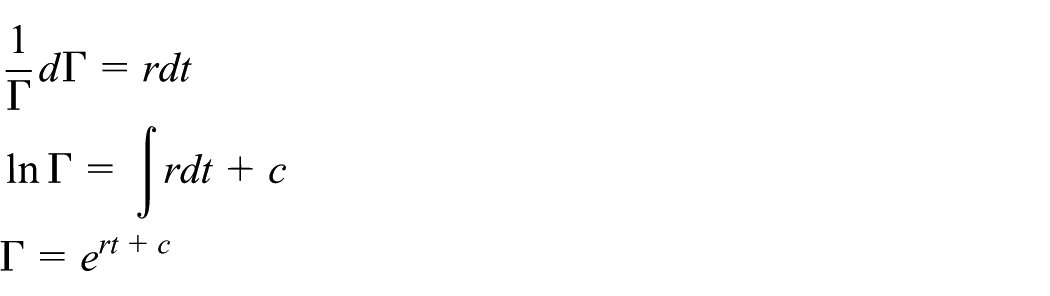
Setting

Substituting

Lemma 1 (trustworthy communication overhead from itself)
Considering trust decay with a constant rate

Considering

If

In a cluster, data are collected by normal nodes and sent to the sink node for aggregation. The CH node forwards the data to the upper-level node. Therefore, as a boundary, the sink node breaks the upper and lower topology nodes into two security domains. Obviously, normal nodes need to establish a trusted communication path to transmit data through the sink node, so the height of minimum spanning tree
Overall, it can be found that, in these three cases proposed in this article, cases 1 and 3 are simplified versions of case 2. Therefore, the experiment in this study is mainly focused on case 2 and the results will be compared with those of the other algorithms.
Experiments
The first experiment is about the energy consumption comparison with the classical algorithm LEACH. Table 3 shows the experimental parameter settings. Figure 5 presents the experimental results. Figure 5(a) shows the initial state of node distribution and the space
Experimental parameters setting.

UOTS: unknown cluster head optimum trustworthy spanning tree.

Topology distribution: (a) initial node distribution, (b) LEACH, (c) multi-hop ignoring trust decay, and (d) trustworthy multi-hop.
In Figure 6, we compare the LEACH algorithm, multi-hop ignoring trust decay, and trustworthy multi-hop algorithm via investigating topological distribution of routing energy consumption against the increase of the number of nodes. The results show that the energy consumed by LEACH is the highest, while the value is less than that of LEACH by about

Energy consumption comparison.
Figure 7 shows the analysis toward energy consumption and trust value of information sent from each node to the sink. The ranges of trust decay are
The larger the trust decay is, the slower the trust decays with the increase of the number of hops in the routing. Nodes send the message to the sink through a longer multi-hop path, and hence the node can save energy by sending the message to the nearby neighboring node. Meanwhile, it can be seen from Figure 6 that the longer the multi-hop path is, the lower the energy overhead is.
Conversely, the smaller the trust decay is, the larger the trust decays. Since some nodes are not able to establish trustworthy communication with sink nodes through multiple hops, it is evitable for some nodes to improve the power of the antenna itself and send data to the sink directly. In this case, it will consume more energy based on the characteristics of radio data transmission.
Trust value to the sink node fluctuates near a certain value. In Chen et al.,
2
the value is called the ground truth. In this case, the multi-hop routing of each node to the sink is relatively stable, and its communication energy consumption is relatively stable within a certain range. The experimental results showed are an example of the energy consumption of each node, which is in the range of

Energy consumption versus trust.
Conclusion
Since different standards and communication stacks are involved, traditional security mechanisms heavily rely on trust management to function well. In this article, we propose an energy-aware trustworthy multi-hop routing model for IoT and introduce a spanning tree routing algorithm to balance energy consumption and trust. The experimental results show that our algorithm is quantitative with energy of about
Footnotes
Declaration of conflicting interests
Funding
ORCID iD
