







Abstract
Introduction
Recent events like the local reaction to increased immigration and refugees as well as vaccine hesitancy have shown how important trust in other people and in institutions is for a functioning society. A recent study by the Inter-American Development Bank (IDB, Keefer and Scartascini, 2022) paints a grim picture of the status of trust in Latin America. The levels of interpersonal or social trust on the continent are at historical minimums, well below the level in rich countries but also below the average of the rest of the world. Furthermore, this study shows that from a relatively high level in 2011, the levels of trust have suffered a constant decline in the majority of Latin American countries. This coincides with a reduction in GDP growth rates across the continent, with some countries experiencing prolonged recessions or, in the case of Venezuela, a total economic collapse.
It is widely accepted that trust is an important feature of a well-functioning society. High levels of trust make economic transactions more efficient by reducing the need and cost of enacting and enforcing contracts. It can also make the future less uncertain by providing common ground for expectations about other people's behavior. Fukuyama (1995) considers trust as a fundamental component of social capital. On the other hand, trust in the political system and institutions can make policy implementation by the government easier and reduce the need to rely on coercion (Tyler, 2006). A number of studies have shown positive effects of social and political trust in a number of outcomes such as trade and international investment (Guiso et al., 2009), economic growth (Knack and Keefer, 1997), political participation (Crystal and DeBell, 2002), patronage (Bustikova and Corduneanu-Huci, 2017), and general well-being (Helliwell et al., 2016).
Given its relevance, there is a growing literature that tries to uncover the factors that determine the levels of social trust in a given society or social group. Even as trust is clearly a multicausal phenomenon, some of its possible determinants have received more attention than others, with income and material well-being one of the most commonly cited. Economic security can make people less risk averse and more likely to trust others. Personal and community income can also serve as a signal to individuals to infer the state of the world and how fair it is. Economic scarcity, on the other hand, can lead individuals to behave opportunistically to get the few resources available, eroding trust. Nevertheless, analyzing the relationship between income and trust has proven difficult because of reverse causality and omitted variables problems. The question to address in this paper is, thus, what is the effect of income on social or interpersonal trust?
I analyze the effect of income shocks on social trust in the context of Latin American regions between 2004 and 2017. Latin America is an appropriate place to study this relationship for a number of reasons. First, after the economic crises of the beginning of the twenty-first century, the continent embarked on a path of rapid growth, triggered at least in part by a boom in the international commodity markets (Gruss, 2014). Second, economic growth aside, the continent is still affected by high levels of inequality and crime (Di Tella et al., 2010). In many countries, trust in political parties and government institutions in general has suffered a steep decline in recent years. Third, some authors have highlighted the problems that may arise when comparing survey responses between countries with different cultures and norms (Torpe and Lolle, 2011). Focusing on one continent reduces this concern. Regional level analysis also enables the use of panel data with fixed effects to account for time-invariant factors that could affect trust differently in different places, such as cultural variables or past historical events. Finally, there is consensus that, at least in political orientation and economic policy, these countries have tended to move somewhat together (see, e.g., Dornbusch and Edwards, 1991, and Levitsky and Roberts, 2011).
To estimate the causal effect of income on social trust, I rely on the exogeneity of the international commodity markets. This kind of variable has previously been used in the literature as a proxy for income shocks (Bazzi and Blattman, 2014). Combining fixed weights based on regional commodity production with variation in international prices provides more confidence in the exogeneity of income shocks. Thus, the natural resource shock index is constructed by assigning weights to commodities based on their respective importance in the export basket of a region and combining it with international prices. Natural resources are a crucial source of income and international currency for Latin American countries, and many people depend directly on the production and export of these products.
I analyze social trust defined as trust in other individuals (besides family and friends). To this end, I rely on data from the AmericasBarometer survey, compiled by the Latin American Public Opinion Project (LAPOP) at Vanderbilt University. I find that income shocks have a positive and significant effect on social trust. This result is robust to different specifications and checks, such as excluding the cases in which a country is a major producer of some commodity, and thus affects the international price. I also show that natural resource shocks have a positive effect on household income and that household income is strongly correlated with social trust. This provides confidence that natural resource shocks affect trust through income.
The evidence supports two mechanisms linking income and social trust: a positive effect through an increase in life satisfaction and a positive effect through a reduction in crime. On the other hand, I do not find that inequality is moderating the effect of income on social trust. Neither do I find that there is a difference between income from extractive and non-extractive resources. Both types of natural wealth seem to affect social trust positively.
This study makes three contributions to the extant literature. First, I rely on commodity prices to overcome the problems of endogeneity when analyzing the relationship between income and social trust. This also enables me to analyze an income shock of large magnitude and its impact across countries. Second, I present evidence about mediators and moderators to understand how changes in income affect how much individuals trust each other. Finally, we know little about the determinants of social trust in Latin America. Some studies have shown that social and political trust are important on the continent, but little empirical work has been done to understand what determines the level of trust and its changes over time.
Literature and Theory
Social or interpersonal trust refers to the expectations that individuals have about the behavior of others. Different definitions of social trust can be found in the literature, although they all share some common central features. Social trust is the belief that others will not behave in an opportunistic way (Keefer and Scartascini, 2022) and that people will act according to norms. The idea of social trust is not how much we trust our family or friends but how much we trust people in general.
There are a number of reasons why income and economic conditions can affect social trust. To the extent that trusting others entails some risks, higher levels of income and economic security can make people less risk averse since they are in a better position to deal with the consequences of opportunistic behavior from the other party. Income (both personal and at the community level) can be used by individuals as a signal to infer the fairness of the world. If higher levels of income make individuals more optimistic about the state of the world, this could generate more incentives to trust others. A worsening of economic conditions can also make individuals have to compete for the few resources available, leading to less cooperation and more opportunistic behavior, eroding trust (Coenders, 2001).
Given the importance of social trust, a number of studies have analyzed its determinants. A few studies, such as that of Nunn and Wantchekon (2011), focus on long-run determinants of trust. Given that trust can have considerable variation over relatively short periods (Keefer and Scartascini, 2022), a larger literature has focused on more immediate factors that affect the levels of trust. One of the first attempts to systematically analyze its determinants is the study by Alesina and La Ferrara (2002). The authors find that income and education have a positive correlation with social trust, and this relation is rather linear. Also, financial misfortune has the strongest negative association with trust.
Although the correlation between income and trust has been established in many studies (Corbacho et al., 2015; van der Cruijsen et al., 2016; Mewes et al., 2021), problems of reverse causality and endogeneity are pervasive. First, most authors claim that the direction of the causal relation goes from income to trust, but the inverse has also been evoked. For example, Uslaner (2013) shows that trust affects risk perceptions even after controlling for personal experience, while trust can also help build more social capital that can translate into better economic conditions (Putman, 2000). On the other hand, it is possible that the correlation between income and trust is the result of some third variable that determines them both. As Barone and Mocetti (2016) assert, more trusting societies appear to perform better than less trusting societies in a range of dimensions. Some studies have tried to deal with endogeneity using panel data (Brandt et al., 2015), structural models (Bergh and Bjornskov, 2014), or instrumental variables (Ananyev and Guriev, 2018).
Besides identification, another area that deserves more attention concerns the mechanisms behind the relation between income and trust Given the multiple ways in which income can affect trust, we need more specific knowledge about this relationship to inform policies aimed at increasing trust. One possible mechanism relates to people's beliefs and psychology. To the extent that individuals judge the fairness of the world using, at least in part, their own experiences, poverty can lead to the conclusion that society is unfair. Also, poverty and exclusion can lead to individuals becoming more psychologically defensive, affecting trust negatively (Brandt et al., 2015). Based on this, income is expected to affect how people judge the fairness of their society and their overall life satisfaction.
Changes in income can also operate indirectly through other variables. For example, crime can affect both trust in the community (as more people are perceived as a threat) and in the government (as this may be interpreted as a signal of poor quality or malfunctioning of public institutions). Crime has received less attention in the literature, but it can be an important mechanism linking income and trust. Higher levels of crime can make people less willing to trust individuals outside their closest circle. Moreover, this is possibly stronger within poor populations, which can invest less in security and tend to live in more dangerous places. In the Latin American context, Corbacho et al. (2015) find that crime reduces trust in the police and local authorities but find no effect on social trust or trust in the judiciary, while Fran and Malone (2010) do find a negative effect of crime victimization on trust in the judicial system. To the extent that income is related to crime (Fajnzylber et al., 2002), this variable could be mediating the effect of income on social trust.
Many authors have stressed that income does not always have a positive or negative effect on trust. Instead, they claim that the sign of this relation is determined by inequality. There are several ways in which the effect of income on trust can be moderated by inequality. Studies have shown that people do not evaluate the fairness of their context by just using their own experience but also by comparing themselves to others (Lewis-Beck and Stegmaier, 2007). Following this argument, if a positive income shock exacerbates existing inequalities, it may have a negative effect on trust. On the other hand, if different social groups start to separate and isolate, the lack of interaction can make them less likely to trust the other groups (Brandt et al., 2015). In this sense, inequality operates as a source of diversity and socioeconomic distance (Barone and Mocetti, 2016). A number of studies have shown that inequality negatively affects trust (Bergh and Bjornskov, 2014; Gustavsson and Jordhal, 2008; Zmerli and Castillo, 2015). Given these arguments, inequality is expected to condition the effect of income on trust.
Finally, in this paper, I use a particular kind of economic shock: a natural resource shock. There is a vast literature on the effects of natural resource wealth. 1 This type of wealth has been related to corruption (Busse and Groning, 2013; Pendergast et al., 2011). An increase in corruption can affect trust in politicians and institutions, but it is not clear from the literature how this would translate into lower levels of social trust The few empirical studies on this topic show contradictory findings, with some showing a negative effect of oil and gas wealth on social trust (Ishiyama et al., 2018), while others do not find any effect (Cappelen et al., 2021).
Data and Identification Strategy
Natural Resource Shocks
My identification strategy relies on the exogeneity of commodities’ prices. The assumption is that Latin American countries are price takers in global markets.
2
For the construction of the independent variable, I follow the approach of Bazzi and Blattman (2014), allowing for different regions within one country. First, the price of the fifty-three commodities considered here is calculated in 2014 US dollars. Then, the price of commodity 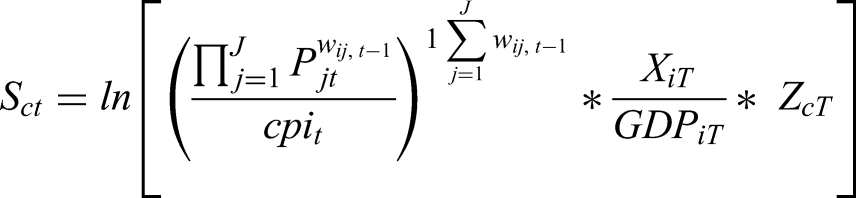
Besides including a large number of commodities, the main advantage of such an index comes in terms of identification. The main variability is given by international prices, which can be considered exogenous from the perspective of each region. In turn, focusing on variations in export quantities may introduce bias because these can be related to domestic variables. On the other hand, international prices have more variability and provide more power to the regressions (Lee and Gueye, 2015). Although international prices present a more convenient variability for the construction of the index, these must be weighted by the exports of each unit (otherwise, all regions would have the same values for this variable, even if they do not produce the commodity in question). That is why I use fixed weights and fix the ratio between exports and GDP. A list of the fifty-three commodities used to construct this variable is shown in Table A.1 in the Appendix.
Data for international prices are taken from the International Monetary Fund (IMF), while data for the relative weight of each commodity in the export basket for each country are taken from the United Nations Conference on Trade and Development (UNCTAD). Data on the value of exports and GDP come from the World Development Indicators (WDI). Data on commodity production by region and provinces come from different sources for each country and can be consulted in Table A.2 in the Appendix.
Table 1 shows the share of exports of the commodities considered here over total exports for each country in the sample. Natural resources are an important economic factor across the continent. The average for all countries is above 50 percent, and in cases like Bolivia and Venezuela, the share of commodities in total exports is around 90 percent.
Commodity Export Shares.

The following figure shows the evolution of the commodity price shock measure over time, for the period 2000−2017. From relatively low levels at the beginning of the century, there is a rapid increase that was only temporarily stopped by the effects of the Great Recession in 2009. After this significant drop, prices continued to increase, reaching their maximum in 2011. Starting in 2014, there is a decrease in the value of this index, which coincides with the end of the commodity boom in international markets. Nonetheless, these values stabilized at a higher level than they did two decades ago (Figure 1).

Commodity Price Shocks.
Social Trust
Social trust is a complex and multidimensional social phenomenon. Even with some common ground on a definition, questions about operationalization still remain. The most common measures in the literature involve responses to survey questions about how much the respondents trust people outside their inner circle. Survey measures of social or interpersonal trust have received some validation from experimental measures (Keefer et al., 2019), at least for a definition of social trust that involves expectations about other people's behavior (Sapienza et al., 2013).
To operationalize social trust, I use data from the AmericasBarometer survey, compiled by the LAPOP. In particular, I use the answers to the following question: “Would you say that people in this community are very trustworthy, somewhat trustworthy, not very trustworthy, or untrustworthy?” With response to this question, I create a 4-point scale, with four meanings
Notwithstanding the reasonable caveats regarding the use of just one survey item to measure a concept like social trust, this particular question has some desirable characteristics. First, one issue with survey measures is wording and whether respondents actually understand the question. This item follows the recommendation by Lundmark et al. (2016) of using minimally balanced wording to make it easier for respondents to provide an answer that reflects their beliefs more accurately. Second, some studies have shown that questions with multiple answers perform better than dichotomous questions (Naef and Schupp, 2009; Lundmark et al., 2016). Social desirability bias is another concern when dealing with survey data. In order to assess this possibility, I follow the approach of Alesina and La Ferrara (2002) and code “do not know/do not answer” responses as “untrustworthy.”
The fact that survey data are representative at the regional level is particularly useful for the identification strategy, given that commodity production is clearly geographically determined. For example, the expectation is that an oil boom would have a greater impact in the oil-rich southern provinces of Argentina than in the northern ones 1,500 km away. One possible concern is that the central government taxes commodity exports at the provincial level and then redistributes these resources. Even if this is the case, the effects should be stronger where production in fact takes place. Booming industries have spillover effects that are stronger in close locations. Furthermore, if there is a significant effect of commodity booms at the regional level, my results can be interpreted as a lower bound, given the existence of redistribution of these resources by the central government.
Figure 2 shows the mean levels of social trust in the fourteen countries in my sample in 2017. The countries with the highest levels of trust are Uruguay, Argentina, and Costa Rica, some of the countries with the highest social and development indicators on the continent. The countries with the lowest levels of trust in 2017 are Peru, Brazil, and Bolivia.

Social Trust by Country (2017).
Differences in social trust between countries are less dramatic than differences in income. For example, Costa Rica's GDP per capita is about six times higher than Honduras's, and both countries showed similar absolute levels of social trust in 2017. My claim is not that income alone fully explains trust. As indicated by the literature, social trust depends on a whole set of determinants, and countries tend to move around some level of trust. Where my hypothesis is more about those movements, other variables probably determine the differences in mean levels of trust between Costa Rica and Honduras during a long period of time. To the extent that some of these variables are rather constant (e.g., variables related to culture) regional analysis and fixed effects are a helpful way to isolate the effects of changes in income.
To get a better idea of these changes, we can look at how social trust changed over time in the continent. As shown in Figure 1, the upward trend in commodity prices started to reverse around the year 2011. In the following figure, I plot the changes in social trust at the country level for two periods: from the first year in which a country enters my sample to 2012 and from 2012 to 2017. 5 While social trust increases by around 4.5 percent on average during the first period, trust levels decrease 5 percent from 2012 to 2017, with Brazil experiencing a decline in social trust of more than 10 percent. While eleven out of fourteen countries experience an increase in social trust in the first period (large in magnitude in cases like Argentina, Bolivia, and Peru), trust decreases in all countries except for Uruguay in the second period. These variations seem large enough to consider changes in income as a relevant determinant of social trust, at least in the short and medium runs (Figure 3).

Variation in Social Trust.
Control Variables
Control variables are taken from the existing literature. Since there are several possible channels of mediation between income and trust, caution must be taken in order to avoid post treatment bias. I use sex, age, education (since income may affect this variable only over the long run), a dummy variable that indicates if the respondent lives in an urban area, and the size of the city or town of the respondent as individual control variables. These data are taken from the AmericasBarometer survey. Some specifications also include country-level variables like democracy from Polity IV, and GDP growth rate and inflation rate, both taken from the WDI. All variables taken from the AmericasBarometer survey are averaged at the regional level, which is the unit of analysis. In Table A.4 in the Appendix, I show descriptive statistics for the variables used in the empirical analysis.
Analysis and Results
In this section, I present the results on the effect of income shocks on social trust. I run different models but the main specification is as follows:
I present the main results in Table 2. 6 Column 1 shows the effect of natural resource shocks on social trust, including only regional controls. An increase in 1 SD in natural resource shocks is associated with an increase close to 0.05 points in social trust, which is significant at 1 percent. I include regional fixed effects in Column 2 to control for regional specific characteristics that do not vary over time. When including regional fixed effects, the significance of the results holds and the coefficient almost doubles. In Column 3, I include country-level variables (the rate of inflation, GDP growth, and Polity IV score), and in Column 4, a time trend is added. The magnitude of the coefficient does not change much, and the effect of natural resource shocks on social trust remains significant. In previous specifications, I coded “do not know/do not answer” responses to the question about social trust as “untrustworthy.” In Column 5, I depart from this assumption and drop these responses. Results remain significant at 5 percent, and the magnitude of the coefficient is similar to the baseline specification.
The Effect of Income Shocks on Social Trust.

***, **, and * indicate statistical significance at 1%, 5%, and 10%, respectively.
So far, I have treated the dependent variable as continuous. To assure that using OLS is not distorting the findings, I run the same specifications in Table 3 using an ordinal logit model. Results are presented in Table A.5 in the Appendix, and they show that resource shocks are positively associated with social trust. In Figure 4, I estimate the same model as in Column 4 of Table 3, excluding one country at the time. Results are always positive and significant, and also similar in magnitude. Thus, it is not the case that the results are driven by a single country. Actually, the effect seems to be consistent across the continent.
To provide more confidence in these results, in the next table, I propose a series of checks. The theoretical explanation for the association between natural resource shocks and trust is mediated by income. It is, therefore, crucial for my hypothesis that the effect of income shocks goes through income. To show that this is the case, I provide two sets of results. First, I analyze if resource shocks have an impact on individuals’ income. Column 1 of Table 3 shows that natural resource shocks have a positive impact on household income (taken from the AmericasBarometer survey). 7 An increase in 1 SD in the resource shock measure is associated with an increase of 0.229 points in household income. Next, Column 2 shows that household income is strongly related to social trust. These results are significant at 5 percent and 1 percent, respectively. As a second and complementary approach, I run an instrumental variables regression, with household income as the endogenous regressor and natural resource shocks as the instrument. The result of the IV regression in Column 3 further supports the hypothesis that income positively affects social trust. 8

Effect of Income Shocks on Social Trust.
Robustness Checks.

***, **, and * indicate statistical significance at 1%, 5%, and 10%, respectively.
These results support the interpretation of the main empirical results of this section. Nevertheless, this does not guarantee that there is no endogeneity. The identification strategy rests on the idea that these countries are international price takers but this may not be true in some cases. For example, Argentina and Brazil are major producers of soy, while Chile is the world's leading exporter of copper. The issue here is that domestic factors have the potential to affect international markets. In such a situation, a third variable could be simultaneously affecting social trust and international prices. As a robustness check, in Column 4 of Table 3, I run the main specification dropping any commodity where one country accounts for more than 10 percent of the global market. Results remain unchanged, and income shocks have a positive and significant effect on trust Finally, I carry out a placebo check. In Column 5, I construct the same measure of natural resource shocks but randomly assign the weights of each commodity through regions. Results here should be insignificant since changes in the prices of commodities that are not produced in a given region should not have an impact on trust there. The coefficient for the placebo measure of natural shocks is insignificant and very small, providing support to the main results.
Overall, I find that natural resource shocks generated an increase in income that positively affected social trust. The estimated coefficients are modest in magnitude but, as I stated before, given that the central government can tax and redistribute resource wealth across regions, these estimates can be taken as a lower bound on the true causal effect.
Mechanisms
The next step is to consider which mechanisms could be driving the relationship between income and social trust. Up to this point, I have provided evidence to support the assumption that natural resource shocks are generating an exogenous shock to income at the regional level. The following mediation analysis is more exploratory, and I analyze some necessary conditions on the proposed mechanisms (see Imai et al., 2010 for a further discussion on mediation analysis).
As discussed in previous sections, income may have an effect on social trust through the views that individuals have about the world and how they feel. To analyze this possibility, I check if life satisfaction is mediating the relationship between income shocks and trust. I construct the variable
The second mechanism I analyze is related to crime victimization. Crime is high across Latin America, with some countries like El Salvador, Honduras, and Venezuela ranking at the top of the worldwide homicide rate. Crime can affect social trust by making people feel more insecure and fearful of strangers. This is another variable that could affect trust but also be affected by changes in the level of income. The variable
I test both mechanisms in Table 4. First, in Column 1, I show that life satisfaction and crime victimization have a significant effect on social trust and that the coefficients have the expected signs. Life satisfaction is associated with higher levels of reported trust at the regional level, while crime is negatively associated with trust. Then, I analyze if income shocks affect these potential mechanisms. In Column 2, I show that resource shocks have a positive effect on life satisfaction. One possible drawback is that life satisfaction is a complex measure that might not be fully captured by this particular question. The conclusion is the same when analyzing individual-level data for 2010, for which the AmericasBarometer survey provides an additional measure of life satisfaction. 9 Resource shocks also have a negative and significant effect on crime, as expected. The magnitude of the coefficients is not very large, which is consistent with the significant but moderate effect of natural resource shocks on social trust found in previous specifications.
Mechanisms and Moderators.

***, **, and * indicate statistical significance at 1%, 5%, and 10%, respectively.
Moderators
As a final empirical step, I analyze whether the positive effect of income shocks on social trust is conditional on other variables. The most cited one in the literature is income inequality. If changes in income generate large inequalities, this could negatively affect trust, even if total income actually increases. It is possible to construct a measure of income inequality for each region, such as a Gini index, with data on household income. If income has a different effect on trust depending on the level of inequality, the interaction between income and inequality should be significant. In particular, the expectation is that the effect of income on trust should be (more) positive where inequality is relatively low.
As shown in Column 4 of Table 4, I do not find any evidence that the effect of income on trust is conditioned by inequality. This result is interesting since many authors have claimed that inequality is what moderates the effects of income on trust. Nevertheless, it should be accepted with caution. The regional Gini coefficients calculated in this section rely on survey data that separate individuals into categories of income, with the last category always being something like “more than $X.” It is clear that, with these kinds of data, I am underestimating the true levels of inequality in these regions.
Finally, I differentiate between types of commodities. Based on the literature on the resource curse, it is possible that different types of commodities (extractive vs. non-extractive) can have different effects on social trust. In Columns 5 and 6, I construct the same measure of natural resource shocks for extractive and non-extractive commodities separately. The results show that there is no difference between both types of commodities, at least in their effect on social trust. Both are positive and significant, and the magnitude of their coefficients is almost identical. 10
To sum up, I find a positive effect of natural resource shocks on social trust, which is robust to different checks and specifications. The evidence that I show is consistent with the idea that income affects social trust through life satisfaction and crime. On the other hand, I do not find evidence that inequality is conditioning the effects of resource income shocks. Neither do I find a difference between extractive and non-extractive commodities in terms of their effect on social trust.
Resource Shocks and Political Trust
It is possible that commodity shocks are also affecting political trust. Changes in income have been linked to trust in political institutions in the literature (Catterberg and Moreno, 2005; Corbacho et al., 2015; Zmerli and Castillo, 2015). In this subsection, I estimate similar models as in the baseline specification in Table 2 using measures of political trust taken from AmericasBarometer. In particular, I check if natural resource shocks have an impact on trust in the Executive branch, the Legislative branch, and local governments. Unlike social trust, these variables are measured on a 7-point scale. Besides the control variables I used before, I also include a measure of the strength of partisan ties and a measure of interest in politics, since both variables could affect political trust. As before, responses are aggregated at the regional level. Results are relegated to Table A.6 in the Appendix.
I find that income shocks are associated with an increase in trust in the Executive but have no effect on the Legislative branch or on local governments. 11 To further explore the relationship between income and trust in the Executive branch, in Column 4 of Table A.6 I show that income shocks are associated with an increase in presidential approval ratings. This finding disputes the idea that income is affecting political trust since trust in the Executive and the evaluation of a particular politician's performance are different concepts (although it could be hard to disentangle them sometimes). In Column 5, I propose an additional check. I estimate the same model for trust in the Executive but also control for presidential approval ratings. The latter has a strong positive effect, but in this specification, income shocks are no longer significant.
Overall, these findings seem to cast doubt on the idea that income is related to political trust. But before reading too much out of these results, an important caveat is in order. In this paper, I focus on a particular measure of income, which is related to changes in the international markets of commodities, and not to particular policies at the country level. That is to say, politicians do not affect the value of my independent variable. So, another way to interpret these findings is that individuals are not reacting to these changes in income because commodity prices are not determined by politicians. My identification strategy is more suitable to analyze social trust and does not enable me to make a distinction between these two hypotheses in this sample.
Conclusion
Trust is an important component of social capital and a crucial feature of a well-functioning society. A growing literature seeks to uncover the determinants of trust Income is often cited as one of the most relevant, but estimating causal effects has proven difficult, especially when testing changes in trust in the short or medium run. In this paper, I study the effect of income on social trust in Latin American regions. To overcome problems of endogeneity, I use variation in the international prices of commodities as an exogenous source of variation in income. This strategy is suitable for Latin American countries since commodity exports are an important source of revenue and international currency for governments and also a crucial source of income for a significant share of the population. The focus on regions within countries also helps to measure these effects more accurately, using variation in the productive profile of different regions.
My main finding is that income has a positive effect on social trust. This result, albeit moderate in magnitude, is robust to different specifications and checks. Also, given that it is likely that the central government is redistributing some of the gains of commodity exports, these results can be understood as a lower bound on the effect of income on social trust. Then, I analyze some possible mechanisms that could explain the link between income and social trust. I find that income increases trust through its positive effects on life satisfaction and its negative effects on crime victimization. Both of these variables strongly correlate with social trust. On the other hand, although widely cited as an important moderating variable, I do not find evidence that inequality is conditioning these effects. Finally, I find no evidence of a natural resource curse in terms of social trust.
Three considerations are left for future research. First, with more reliable causal estimates on the effects of income on trust, the empirical literature should go more deeply into the role of inequality. Here, I showed that it is not as clear as the current literature points out that inequality is conditioning the effects of income on trust. Nevertheless, more sophisticated tests could be carried out, even using an identification strategy such as this one. One possibility is to combine this kind of shock with natural resource ownership or land inequality. Le Billon (2014) makes the case that some types of natural wealth may have different effects on inequality. For example, oil is often controlled by a few private companies or the state. On the other hand, gold and other minerals are a source of income for many communities (and illegal groups) in countries like Peru. Taking resource ownership into consideration when using variation in international prices could be a step toward addressing the conditioning effects of inequality on trust.
Second, in every country analyzed here, the central government has, to different extents, distributed the rents from the natural resource boom. For example, Argentina has an export tax on soy of 30 percent, which is collected by the federal government. As I claimed before, this fact implies that the estimates on the effect of income on trust can be understood as a lower bound. Another step forward would be to include the degree of redistribution or taxes in the analysis. Different countries have different tax and spending schemes for different commodities. How these resources are distributed across regions could be an interesting avenue for expanding the study of social trust within countries.
Finally, I do not claim that life satisfaction and crime are the only variables that link income with social trust. There are other important factors that I left aside in this project, such as risk perceptions. Given my data and empirical approach, I left the study of other mechanisms for future research.
Supplemental Material
sj-docx-1-pla-10.1177_1866802X221122295 - Supplemental material for Income and Social Trust in Latin America
Supplemental material, sj-docx-1-pla-10.1177_1866802X221122295 for Income and Social Trust in Latin America by Juan Pablo González in Journal of Politics in Latin America
Supplemental Material
sj-dta-2-pla-10.1177_1866802X221122295 - Supplemental material for Income and Social Trust in Latin America
Supplemental material, sj-dta-2-pla-10.1177_1866802X221122295 for Income and Social Trust in Latin America by Juan Pablo González in Journal of Politics in Latin America
Supplemental Material
sj-do-3-pla-10.1177_1866802X221122295 - Supplemental material for Income and Social Trust in Latin America
Supplemental material, sj-do-3-pla-10.1177_1866802X221122295 for Income and Social Trust in Latin America by Juan Pablo González in Journal of Politics in Latin America
Footnotes
Declaration of Conflicting Interests
Funding
ORCID iD

Supplemental Material
Author Biography
References
Supplementary Material
Please find the following supplemental material available below.
For Open Access articles published under a Creative Commons License, all supplemental material carries the same license as the article it is associated with.
For non-Open Access articles published, all supplemental material carries a non-exclusive license, and permission requests for re-use of supplemental material or any part of supplemental material shall be sent directly to the copyright owner as specified in the copyright notice associated with the article.
