







Abstract
Keywords
Introduction
Across the globe, English has evolved into a dominant lingua franca, shaping education systems, labor markets, and cultural exchanges (Zeng & Yang, 2024). As a gateway to global mobility and opportunity, English learning is often linked to high academic expectations and intense social pressure. In many countries, it has become a core component of national curricula, taught alongside mathematics and the sciences. China exemplifies this trend, where English has shifted from being viewed as a Western imposition to a subject of strategic national importance (Li, 2020). Since its economic reforms and global engagement, marked by events such as WTO accession and the 2008 Olympics, China has witnessed a surge in English learning, fueling a booming private education sector and widespread emphasis on English proficiency (Pang et al., 2002).
Yet, despite this global prominence, EFL (English as a Foreign Language) learners continue to face persistent challenges in grammar, vocabulary, and pronunciation that often lead to language anxiety, reduced willingness to communicate, and diminished academic confidence (Dewaele et al., 2024; Tutton & Cohen, 2024). These challenges are amplified in exam-oriented contexts such as China, where English proficiency is closely tied to academic and career success, often at the cost of learners’ psychological well-being. To counter these pressures, scholars have turned to positive psychology to reconceptualize language learning as both a cognitive and emotional experience. Fredrickson’s broaden-and-build theory (1998) highlights that positive emotions, such as enjoyment, pride, and interest expand learners’ thought–action repertoires and foster resilience, motivation, and engagement. This perspective has inspired growing interest in understanding not only learners’ objective progress but also their subjective sense of growth and fulfillment.
These perceptions are captured in the concept of Sense of Learning Gain (SLG), which reflects students’ self-perceived academic progress and the emotional satisfaction derived from learning (Li et al., 2021, 2022). SLG encompasses two components: the gain, denoting perceived improvement in competence, and the sense, reflecting the enjoyment and fulfillment accompanying learning (Zhou et al., 2016). While the notion of learning gain has been examined in fields such as surgical training (Koch et al., 2024), online education (Shao et al., 2024), tourism management (Zhong et al., 2022), and computing (Lim et al., 2012), these studies primarily emphasize objective outcomes. In contrast, SLG captures learners’ subjective perceptions and emotional satisfaction (Li et al., 2021, 2022). Existing applications of SLG across disciplines, such as Chinese medicine (Hong et al., 2023), higher education (Li et al., 2022), and food science (Wan & Guo, 2021) highlight its versatility but also reveal its limited adaptation to language learning.
Despite its conceptual alignment with affective and motivational constructs central to second language acquisition (SLA), including motivation (Dörnyei & Ushioda, 2009), enjoyment (Dewaele et al., 2018), self-efficacy (Y. Wang & Sun, 2024), and grit (Botes et al., 2024), SLG remains underutilized in this field. Language learning also involves affective and sociocultural challenges such as identity formation (Xiao & Zhao, 2022), cross-linguistic interference (Contemori et al., 2019), and communicative anxiety (Y. Wang et al., 2024), underscoring the need for an instrument that integrates cognitive, emotional, and motivational dimensions of progress. While existing research has produced an SLG scale for Chinese language learners (Li et al., 2021), the distinctive cognitive and sociocultural characteristics of English learning necessitate a domain-specific instrument. In response, the present study proposes the Sense of English Learning Gain (SELG) scale, a theoretically grounded construct and measurement tool developed to assess EFL learners’ perceived progress and emotional engagement in English learning.
By conceptualizing and validating the SELG scale, this study contributes to the growing intersection of positive psychology and SLA in two major ways. First, it advances a domain-specific framework that captures the multifaceted nature of English learning, encompassing both achievement and affective experience. Second, it provides a psychometrically robust instrument for assessing learners’ perceived progress, offering educators insights to design more supportive and motivating language learning environments.
The Nature of Sense of English Learning Gain (SELG)
Learning gain has traditionally been defined as measurable academic progress over time, often quantified through standardized test scores or objective performance indicators. While such measures capture improvements in knowledge and skills, they have been criticized for overlooking the learner’s internal growth experience, especially in contexts where emotional and motivational factors are critical to success (Yorke, 2001). This limitation has prompted a shift toward more holistic interpretations of learning gain that account for students’ subjective perceptions of their development.
In response to these critiques, researchers have studied SLG, which expands the definition of learning gain to include students’ self-perceived academic progress and the emotional satisfaction derived from it (Li et al., 2021, 2022; Zhou et al., 2016). SLG consists of two core components: the “gain,” which refers to perceived improvements in knowledge and skills, and the “sense,” which captures the emotional responses, such as pride, fulfillment, or enjoyment, that accompany these improvements (Zhang, 2017). This perspective draws heavily from positive psychology, particularly Fredrickson’s broaden-and-build theory (Fredrickson, 1998), which posits that positive emotions expand individuals’ thought-action repertoires and help build enduring personal resources, such as resilience, optimism, and cognitive flexibility. In educational settings, these emotions have increased learners’ engagement, perseverance, and creativity (X. Wang et al., 2025). When learners experience progress, it fuels motivation, resilience, and engagement, creating a self-reinforcing cycle of learning and emotional well-being (Y. Wang et al., 2024). In this sense, SLG functions as an outcome and a catalyst for sustained academic growth.
Although the Sense of Learning Gain (SLG) offers a strong foundation for understanding learners’ perspectives on academic progress, limited research has been conducted in particular areas, such as English as a Foreign Language (EFL) education. To address this gap, the present study introduces the Sense of English Learning Gain (SELG), a domain-specific adaptation of SLG that captures learners’ self-perceived development in English proficiency alongside the positive emotional and motivational experiences accompanying their language learning journey. We explain SELG based on Seligman’s happiness theory (M. E. P. Seligman, 2002), which consists of three key dimensions: the Pleasant Life, representing learners’ enjoyment and satisfaction derived from prior English learning experiences (past SELG); the Engaged Life, reflecting their current immersion, motivation, and effort in learning (present SELG); and the Meaningful Life, emphasizing their sense of purpose and how English aids in achieving their long-term goals (future SELG). This tripartite model is enhanced by affective and motivational elements from Second Language Acquisition (SLA), such as L2 motivation (Dörnyei & Ushioda, 2009), foreign language enjoyment (J. M. Dewaele et al., 2018), self-efficacy (Y. Wang & Sun, 2024), and grit (Botes et al., 2024). These factors influence learners’ perceptions of growth, resilience, and involvement. Grounded in Seligman’s theory and Fredrickson’s broaden-and-build framework, SELG is seen as a dynamic psychological resource that indicates perceived progress and promotes continuous engagement and well-being in language learning. Therefore, SELG provides a solid theoretical and context-aware perspective for assessing the comprehensive experience of EFL learners.
Overview of the Study
This research examined the nature and structure of the Sense of English Learning Gain (SELG) among Chinese EFL learners. In the initial phase, we characterized SELG through an in-depth qualitative analysis, focusing on its primary cognitive and emotional components. The second phase involved creating a multidimensional SELG scale based on exploratory factor analysis (EFA). In the third phase, we verified the scale’s validity through confirmatory factor analysis (CFA). Figure 1 depicts the sequence of the study.

Overview of the studies.
This study involved human participants and followed established ethical standards. The study design posed minimal risk because participants were only asked to complete a self-report questionnaire and voluntarily share their experiences with English learning. Participation was entirely voluntary, and students could withdraw at any time without penalty. All responses were anonymized to ensure confidentiality, and data were stored securely to prevent unauthorized access. The potential benefits of this research, including improving understanding of students’ sense of English learning gain (SELG) and guiding more supportive language learning practices, outweigh the minimal risks, as the study does not address sensitive or intrusive topics. Written consent was obtained from all participants and their legal guardians prior to the data collection. Students and guardians received detailed information about the study’s purpose, procedures, voluntary nature, and data protection measures.
Phase 1: Conceptualization of SELG
Participants
This study utilized convenience sampling, ensuring representation across key demographic variables while considering practical feasibility. 171 junior high school (JHS) students (77 males, 94 females) were recruited from Anqiu City, Shandong Province, China. Participants were categorized by grade level to reflect the typical progression in English language acquisition: Grade 7 (
Anqiu City was chosen for research due to its accessibility and local schools’ willingness to participate. It is a mid-sized urban area in China that follows the national English language curriculum, offering standardized English education similar to that of other cities. Anqiu’s student population comprises individuals from diverse socio-economic and educational backgrounds, making it a suitable setting for the study. While focusing on a city may limit geographic generalizability, Anqiu represents an academic environment for urban and rural JHS students in China. This context enhances the study’s validity and supports the development and validation of the SELG scale.
Data Collection
Data was collected in February 2024, inviting participants to share their experiences related to Sense of English Learning Gain (SELG). At the beginning of the survey, students were provided with a clear definition of SELG, that is, self-perceived development in English proficiency and the positive emotional experiences accompanying that progress, to guide their responses. The data were collected through an open-ended online questionnaire, administered during scheduled lab sessions. Students were encouraged to express their thoughts and experiences about their English learning gains. The activity took approximately 15 min to complete. The survey also included sociodemographic questions, such as gender, grade, and age.
Content Analysis
We adopted thematic analysis based on Braun and Clarke’s (2006, 2022) five-phase framework to analyze learners’ qualitative reflections on their English learning gains. This flexible yet systematic method enabled us to identify meaningful patterns across participants’ open-ended responses. The NVivo software (QSR International Pty Ltd, 2020) was used for the coding process.
(a) Familiarization with the data: Two researchers read all student responses thoroughly to understand the content and context. This phase aimed to immerse the researchers in the data and develop initial impressions of the participants’ experiences.
(b) Identifying key concepts: The researchers generated initial codes independently, capturing salient and recurring features of the students’ reflections on their SELG. The open coding allowed for a broad exploration of potential meanings.
(c) Indexing: The developed codes were applied consistently across all responses through a line-by-line coding process. To ensure reliability, both researchers independently coded 25% of the data, achieving an inter-rater agreement of 82.4% and a Cohen’s Kappa of 0.76, indicating substantial agreement (Landis & Koch, 1977). Any coding discrepancies were resolved through discussion and consensus.
(d) Charting and mapping: Codes were reviewed and organized into broader thematic categories. Similar codes were clustered, and visual mapping techniques were used to examine relationships among themes and subthemes.
(e) Interpretation: The final themes were refined and interpreted. Recurring patterns and meaningful differences in participants’ responses were highlighted. Representative quotes were selected to illustrate each theme, and analytic memos supported the validity and transparency of the analysis process.
Results
Five aspects of SELG emerged from our data, including (a) engaged and enjoyable learning, (b) confidence and emotional reward, (c) social and communication empowerment, (d) development of core language competence, and (e) fulfillment and growth. Each of these central themes comprises several sub-themes. These themes show the aspects of SELG among middle school students. Table 1 highlights the main themes, subthemes, and corresponding examples of quotes.
Participants’ Experiences of SELG.

Phase 2: Development of SELG Scale
Step 1: Item Generation
We developed 52 items based on qualitative themes from the conceptualization stage to capture the multidimensional nature of learners’ Sense of English Learning Gain (SELG). The initial pool did not aim for equal distribution across dimensions, but a subsequent face validity review by six psychological researchers refined this to 32 items. This approach emphasized three temporal dimensions—past, present, and future SELG —per Seligman’s happiness theory, highlighting past achievements, present involvement, and future aspirations. The 32 items reflected these dimensions: past SELG (11 items), present SELG (10), and future SELG (11). This alignment enhances the scale’s content validity by ensuring holistic measurement of SELG across learners’ temporal experiences. Table 2 presents the details of the 32 items measuring SELG.
Details of 32 Items of SELG.

Step 2: EFA
To improve the scale’s construct validity and refine the measurement structure, we conducted an Exploratory Factor Analysis (EFA). This analysis helped identify the underlying factor structure, eliminate poorly performing items, and ensure that statistically robust and conceptually meaningful items represented the construct.
Participants
Data for the EFA were gathered through convenience sampling from 400 JHS students in Anqiu City, Shandong Province, China, spanning grades 7, 8, and 9. Following data screening, 387 valid responses were kept for analysis. Among the participants, 173 (44.7%) identified as male, while 214 (55.3%) identified as female, with an average age of 13.
Anqiu City was chosen for its representative nature of typical JHS English learning environments in both urban and rural China, as well as the logistical ease and cooperation of local schools. While convenience sampling affects generalizability, employing stratification by grade helps reflect key demographic characteristics pertinent to the target population.
Data Collection
Questionnaires, including the draft SELG scale and demographic questions, were created on an online survey platform and administered in school computer labs. Students spent about 15 min completing the questionnaires during lab sections. The survey included two parts: sociodemographic details and SELGS items. Sociodemographic data included age, gender, and grade. Participants rated 32 measurement items on a seven-point Likert scale from 1 (strongly disagree) to 7 (strongly agree).
Data Analysis
Using SPSS 21, a comprehensive data analysis included item and factor analysis to refine the item pool, determine internal reliability, and evaluate the factorial structure. An item reduction methodology followed established criteria by prior scale developers (Al-Shair et al., 2009; DeVellis, 2017). Items were eliminated if their item-total correlation was below 0.55, correlated highly (
Results
Table 3 shows the mean, standard deviation (SD), and score range for all 32 items. A prior analysis deemed all items fit for inclusion. All items displayed an item-total correlation greater than 0.55. Also, removing any item did not improve Cronbach’s α. The communalities of all items exceeded 0.50, with no floor or ceiling effects, indicating balanced score distribution. Following the prescribed procedures, all items were retained for the factor analysis. The scale’s reliability assessment revealed internal consistency, with a Cronbach’s alpha of 0.98 and split-half reliability, shown by a Guttman’s coefficient of 0.91.
Item Scores.

Table 4 presents the results of the Kaiser-Meyer-Olkin (KMO) measure of sampling adequacy and Bartlett’s Test of Sphericity. The KMO value was 0.97, indicating excellent sampling adequacy for factor analysis (Hutcheson & Sofroniou, 1999). Bartlett’s Test of Sphericity was significant (
KMO and Bartlett’s Spherical Test of the SELG Scale.

EFA utilized principal axis factoring extraction and promax rotation to consider anticipated correlations among various motives (Ford et al., 1986; Hinkin, 1998). The results supported a three-factor solution. The three factors accounted for 79.27% of the variance, exceeding the suggested threshold of 60% (Hinkin, 1998). Catell’s scree plot (Figure 2) visualized the factors, showing a precise inflection at the fourth, reinforcing three underlying factors. Furthermore, a parallel analysis (Horn, 1965) was conducted to confirm the number of factors to retain. The 95th percentile of the randomly generated eigenvalues was used as the threshold. Table A1 (Appendix) shows that the first three eigenvalues from the actual dataset (20.61, 2.48, and 1.72) exceeded the corresponding 95th percentile eigenvalues from the random data (0.75, 0.65, and 0.59, respectively). From the fourth root onward, the actual eigenvalues dropped below the simulated thresholds, indicating that a three-factor solution should be retained. These results support the retention of three factors in the EFA.

Scree plot for 32 items.
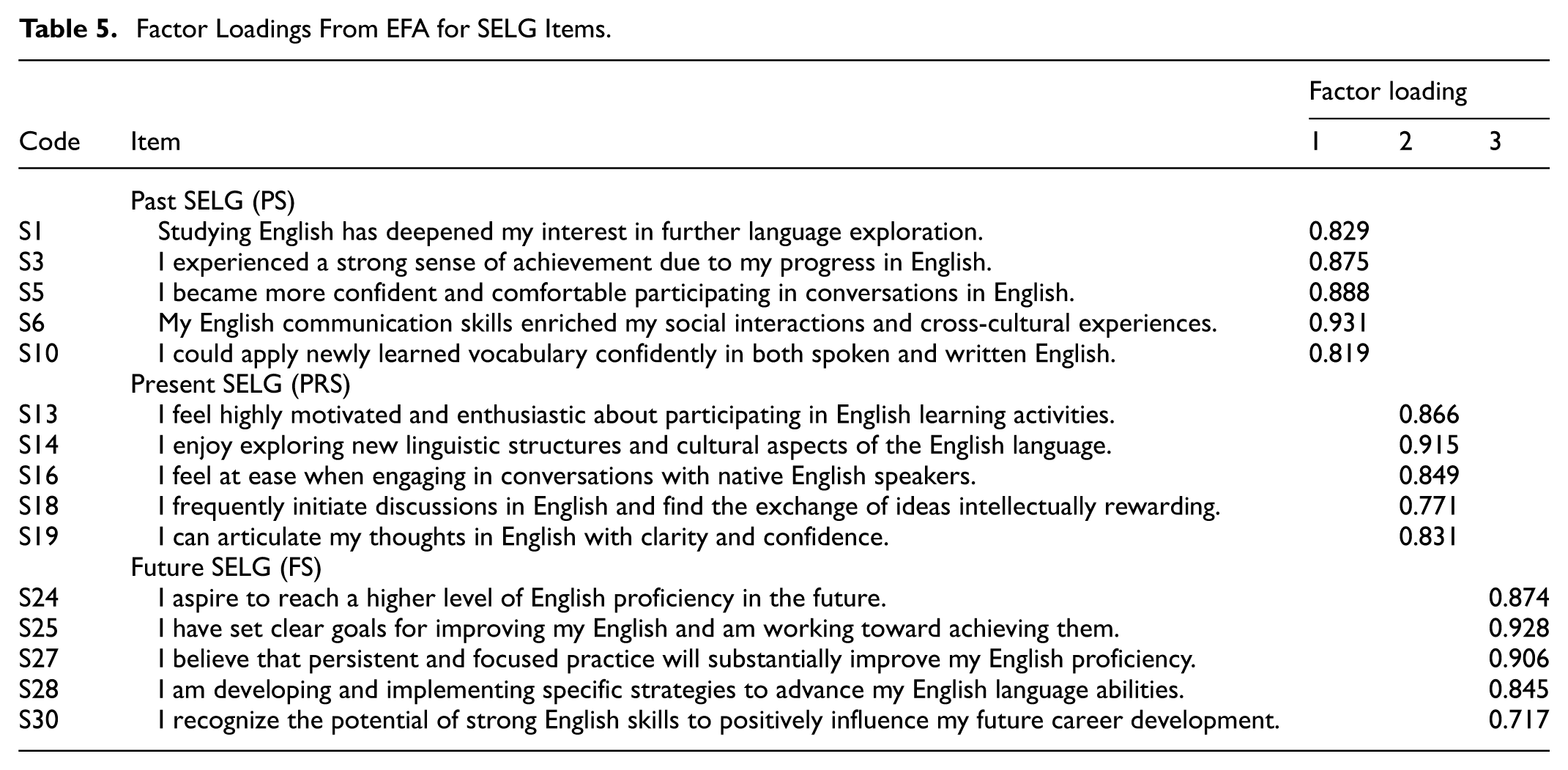
As shown in Appendix Table A2, all items had significant factor loadings (range = 0.43 to 0.98), exceeding the suggested cut-off (i.e., <0.40) (Hinkin, 1998). The EFA results indicated that all 32 items were acceptable. However, it is practically essential to reduce measures to a parsimonious length of around four to six items (Hinkin, 1998). Following established practices in scale development (Han et al., 2023; Harold et al., 2022; B. Hu et al., 2024), we selected items that demonstrated the highest face validity and most substantial alignment with the conceptual definitions of each dimension, particularly when factor loadings were comparably high. To enhance content coverage and reduce redundancy, we reviewed the remaining items and chose five per dimension that captured distinct aspects of the construct through varied yet clear wording (Cortina et al., 2020). We repeated an EFA on these items, and three factors emerged, accounting for 82.63% of the variance explained. The final 15 items and their related EFA loadings are presented in Table 5. The internal consistency reliability of the final 15-item scale was reassessed using Cronbach’s alpha. Each of the three dimensions demonstrated high reliability: past SELG (5 items, α = 0.95), present SELG (5 items, α = 0.94), and future SELG (5 items, α = 0.94). The Cronbach’s alpha for the 15-item scale was 0.96, indicating excellent internal consistency (Nunnally & Bernstein, 1994). These values suggest that the reduced scale retained strong reliability while improving parsimony and clarity.
Factor Loadings From EFA for SELG Items.
Step 3. Pilot Study
We conducted a pilot study to evaluate the scale’s suitability for JHS EFL learners, involving 632 students who completed the 15-item scale to assess its ease of completion and content clarity. Each aspect was rated on a 0 to 10 scale, with 0 being the lowest and 10 the highest level of satisfaction. Participants also provided written feedback. The average ease of completion rating was 7.21, content scored 6.94, and clarity was rated 7.18. According to scale development guidelines (DeVellis, 2017), mean ratings above 6 indicate good comprehensibility and relevance, suggesting the scale was accessible to students. Representative comments included: “Really simple and straightforward” (Participant 57) and “I found it very easy to read and understand” (Participant 561).
However, some participants had concerns about the wording of items. For instance, Participant 37 mentioned that “some items were a bit long but made sense after reading twice,” pointing out the need for more concise phrasing. Therefore, to enhance readability, several complex items were linguistically simplified based on feedback from students and teachers during the pilot study. For example, “I frequently initiate discussions in English and find the exchange of ideas intellectually rewarding” was revised to “I often join English talks and enjoy sharing my ideas.” These revisions enhanced the comprehensibility of items without compromising their conceptual precision or psychometric validity. Furthermore, two JHS English teachers reviewed the revised items and confirmed their appropriateness for the target group. The pilot findings and high internal consistency reliability indicate that the final scale items are accessible and meaningful for JHS EFL learners.
Phase 3: Validation of SELG Scale
In this phase, we conducted CFA to validate the factor structure identified in the EFA and assess the model’s fit. This analysis allowed us to test whether the data supported the hypothesized structure, confirm the adequacy of item-factor relationships, and ensure the scale demonstrated strong construct validity.
Participants
920 JHS EFL learners from Shandong Province, China, were initially recruited for this phase of the study. Due to practical constraints related to school access, administrative permissions, and institutional collaborations, participants were selected through convenience sampling. After a thorough review, 755 responses were deemed valid and included in the final analysis. Of the 755 participants, 356 (47.2%) were male, and 399 (52.8%) were female, with an average age of 13.
Although the sample was drawn from a single province, Shandong was selected for its large population and diverse educational settings, including urban and rural schools with varying levels of English instruction. These characteristics make it a suitable proxy for reflecting broader national trends in English learning among Chinese junior high school students. Schools were purposefully selected from different geographic and socioeconomic backgrounds within the province to enhance representativeness.
Data Collection
Data were collected using an online questionnaire administered in the computer labs of participating schools. The survey consisted of two parts: sociodemographic information (age and gender) and the 15-item SELG (sense of English Learning gain) scale, which measures learners’ perceived English learning gains across three temporal dimensions: past (PS), present (PRS), and future (FS). Each dimension includes five items (see Table 7). All items were rated on a seven-point Likert scale ranging from 1 (strongly disagree) to 7 (strongly agree). Participants completed the questionnaire during lab sessions, which took approximately 15 min.
Data Analysis
CFA was conducted using the maximum likelihood method to validate the item-factor relationships and evaluate the reliability and validity of the SELG scale. First, the factor model was inspected using AMOS 24 SEM software. Model fitness was empirically evaluated using five indices: the overall model Chi-Square (
Results
Table 6 presents descriptive statistics, correlations, and reliabilities. The Cronbach α coefficient for past SELG (PS), present SELG (PRS), and future SELG (FS) ranged from 0.93 to 0.95. The split-half reliability coefficient for the SELG scale was 0.85, demonstrating robust internal consistency. The KMO value was 0.95, demonstrating excellent sampling adequacy for factor analysis. Bartlett’s Test of Sphericity was significant (
Descriptive Statistics and Correlations Among SELG Dimensions.

Factor Loadings from EFA and CFA.

Following initial CFA, model fit was suboptimal (

CFA for the 3-factor SELG model.
To evaluate whether the SELG scale functioned equivalently across gender (male vs. female), a series of multi-group confirmatory factor analyses (MG-CFAs) was conducted. Configural invariance, which tests whether the same factor structure holds across groups, was supported, as indicated by acceptable model fit (
In what follows, we assessed convergent validity and reliability using Average Variance Extracted (AVE) and Composite Reliability (CR). All three SELG dimensions met the recommended thresholds (AVE > 0.50; CR > 0.70) (Fornell & Larcker, 1981). AVE values were 0.71 (PS), 0.75 (PRS), and 0.72 (FS), while CR values were 0.91, 0.94, and 0.93, respectively. These results indicate strong convergent validity and internal consistency for the SELG scale.
Discriminant validity was assessed using both the Fornell-Larcker criterion and Heterotrait-Monotrait Ratio (HTMT) (Fornell & Larcker, 1981). Table 8 demonstrates that the minimum value of the square root of AVE (0.84) was greater than the maximum value of the factor correlation (0.61), indicating acceptable discriminant validity for the scale. This suggests that the SELG dimensions are related yet distinct constructs.
The Discriminant Validity.

The Heterotrait-Monotrait Ratio (HTMT) is a widely used approach for evaluating discriminant validity. It assesses the ratio of correlations between distinct constructs to the correlations within the same construct. A value below 0.90 is commonly regarded as acceptable, signifying the distinctiveness of the constructs. In our instance, all the HTMT values fall beneath the threshold, which confirms that the constructs in our model are separate and do not reflect the same construct. These results indicate that the dimensions, past SELG, present SELG, and future SELG, are unaffected by multicollinearity, as described in Table 9.
HTMT Analysis.

Third, we examined the criterion validity of the SELG scale by assessing its relationship with students’ life satisfaction (LS), measured using the Chinese version of the Satisfaction with Life Scale (SWLS). This relationship is theoretically grounded in Fredrickson’s Broaden-and-Build Theory of Positive Emotions (Fredrickson, 1998, 2001), which posits that positive emotional experiences, such as those arising from perceived learning gains, can broaden individuals’ cognitive and behavioral capacities and contribute to long-term well-being. Within language learning, a student who perceives meaningful progress in English may experience enhanced motivation, pride, and self-efficacy, all of which are linked to higher life satisfaction. Thus, SELG is expected to show a positive correlation with overall life satisfaction, supporting the scale’s criterion-related validity.
To evaluate this hypothesis, Pearson correlation analysis was conducted. As presented in Table 10, the total SELG score showed a strong positive correlation with life satisfaction (LS) as measured by the SWLS (
Correlation Analysis of SWLS With SELG and Its Three Dimensions.

Discussion
This study used a mixed-methods approach to develop and validate an SELG scale for junior high school EFL learners. It conceptualized SELG qualitatively, identifying five themes: enjoyable experiences, emotional rewards, social empowerment, language development, and personal growth. These themes reflect a complex interplay of cognitive, affective, and social experiences shaping learners’ gains. Core themes of enjoyment and engagement support Foreign Language Enjoyment (FLE) research, predicting learner motivation and outcomes. Dewaele and MacIntyre (2014) showed that FLE predicts engagement and achievement, with enjoyment as an emotional and motivational driver. Findings indicate that positive affective experiences are central to learners’ progress. SELG captures emotional resonance and evaluation of growth, with increased confidence reflecting self-efficacy, a predictor of academic success in SLA (Bai et al., 2022; Shang & Ma, 2024). Respondents noted that vocabulary and fluency gains boosted their confidence in real-life communication, aligning with Bandura’s theory (Bandura, 1997) that mastery experiences enhance efficacy beliefs. SELG encompasses skill development and psychological mechanisms sustaining engagement. The social empowerment dimension, where learners use English to connect, aligns with Willingness to Communicate (WTC), as confidence and motivation underpin WTC (Q. Zhang et al., 2024). Findings indicate that SELG mirrors WTC experiences, where learners feel they have “gained” through significant English interactions, strengthening their identity and agency. Personal growth narratives resonate with identity and autonomy research in language learning (Korhonen, 2014). Participants expressed that they became more open-minded, self-aware, and goal-directed through English learning. Language learning enhances overall developmental paths when students view English as a means for personal growth.
EFA of the SELG scale revealed three dimensions: past, present, and future SELG, each with five items. These dimensions align with Seligman’s happiness theory (M. E. P. Seligman, 2002). Past SELG reflects the “Pleasant Life,” indicating learners’ positive emotions, such as satisfaction, contentment, fulfillment, pride, and serenity from prior language achievements (M. E. P. Seligman, 2002; M. Seligman, 2018). This aligns with SLA research, highlighting the motivational benefits of reflecting on past successes (Dörnyei & Ushioda, 2009; H. Li et al., 2024; Ma, 2024). Such reflections enhance self-efficacy, boosting persistence and academic resilience. Present SELG embodies the “Engaged Life,” characterized by joy, ecstasy, calm, zest, ebullience, pleasure, and flow in English learning (M. E. P. Seligman, 2002). This is consistent with Dewaele and Li’s research (2020) that positive emotions promote engagement and enhance language performance. The concept of “flow” emphasizes the significance of rewarding learning activities in amplifying learners’ temporary sense of achievement. Future SELG corresponds with the “Meaningful Life”, encapsulating learners’ optimism, hope, faith, trust, and forward-looking motivation (Fredrickson, 2003; M. E. P. Seligman, 2002). Anticipating future growth acts as a motivational resource for ongoing language learning. Notably, the three SELG dimensions are distinct, suggesting that learners may experience pride in past accomplishments while simultaneously grappling with low engagement in the present or uncertainty about the future. From an educational standpoint, these findings highlight the importance of nurturing students’ emotional experiences over time. This includes encouraging reflections on their achievements, creating engaging environments, and fostering positive future orientations. By focusing on these aspects, educators can enhance students’ overall sense of progress, which is vital for motivation and success.
CFA evaluated the psychometric properties of the SELG scale, including reliability and validity. The scale showed excellent internal consistency, with Cronbach’s alpha over .90 for the total and each dimension, surpassing the high reliability threshold of 0.70 (Nunnally & Bernstein, 1994). These results suggest that the scale reliably captures the global SELG construct among junior high school learners. Model fit indices indicated both good and acceptable fit. The scale demonstrated strong convergent validity, with AVE and CR above 0.70 (Fornell & Larcker, 1981). Inter-factor correlations below 0.80 supported discriminant validity (Kline, 2016). A strong positive correlation between SELG and life satisfaction demonstrated external validity and association with well-being indicators.
However, not all findings aligned uniformly; past and present SELG were strongly associated with outcomes, while future SELG showed relatively weaker correlations. This attenuation may reflect the developmental and motivational characteristics of JHS EFL learners. According to temporal construal theory (Trope & Liberman, 2003), individuals tend to represent distant future events more abstractly and experience them with reduced emotional immediacy compared to near-term situations. For younger EFL learners, this psychological distance may constrain their ability to internalize or meaningfully evaluate anticipated future learning gains, resulting in a less coherent pattern of association with other outcomes. Within Dörnyei’s (2005, 2019) L2 Motivational Self System, the ideal L2 self, the envisioned future identity as a competent English user, remains under development and may lack the vividness or stability necessary to sustain long-term motivational engagement (Papi, 2010; You & Dörnyei, 2016). Consequently, these learners often focus on immediate classroom performance and external evaluations, leading to attenuated correlations between the Future SELG dimension and other outcomes.
Conclusion
This study developed and verified a structured measurement scale for SELG using a three-phase process that integrates qualitative and quantitative analysis. The SELG scale comprises 15 items organized into three components: past SELG (5 items), present SELG (5 items), and future SELG (5 items). The scale showed robust psychometric properties, including high reliability and validity. The SELG instrument can be utilized more broadly, but it requires modifications to suit various age groups and proficiency levels. Primary school learners need simpler language, whereas senior high school and college learners will benefit from items that represent more intricate learning aspects. Additionally, adjustments should be made to account for varying levels of English exposure, ensuring relevance and accuracy. This study offers both theoretical and practical insights by defining SELG as a multidimensional concept, grounded in Seligman’s initial theory of happiness, which connects prior satisfaction, current engagement, and future motivation. Theoretically, it combines perspectives from positive psychology, second language acquisition, and learner identity to enhance the understanding of emotional benefits in EFL learning. Practically, the validated SELG scale serves as a diagnostic instrument for educators, enabling them to evaluate and support students’ emotional and motivational growth over time. This informs personalized teaching and shapes curriculum and policy choices to enhance the overall impact of English education.
While this study provides valuable insights into the development and validation of the SELG scale, its focus on a single province may limit the generalizability of the findings. Educational environments, English teaching practices, and socio-cultural contexts can differ substantially across regions in China. Such regional variations may influence students’ access to English learning resources, instructional quality, exposure to English outside the classroom, and attitudes toward language learning, all of which could shape their perceived sense of English learning gain. Therefore, future studies are encouraged to include participants from multiple provinces to capture these contextual differences and enhance the external validity and nationwide applicability of the SELG scale. Also, the study relied solely on student self-reports without triangulation from teachers, parents, or peers, which may limit contextual depth and validity. To address these limitations, future research should pursue cross-cultural validation to test and adapt the SELG scale and thematic framework in diverse educational and cultural contexts. Incorporating multiple stakeholder perspectives, including input from teachers, parents, and peers, would provide a more comprehensive understanding of SELG. In addition, applying the scale across different learner groups and using longitudinal designs would help assess its developmental sensitivity and capture how SELG evolves over time. Examining SELG as a predictor of academic outcomes and emotional well-being could also highlight its diagnostic potential. Finally, integrating SELG with related psychological constructs, such as motivation, self-efficacy, or learner engagement, may clarify its role within broader models of language learning and development.
Footnotes
ORCID iDs
